Case Study

FuseWallet

Embedded smart wallets and gas sponsorship for consumer apps.

In Progress
Project Status
ERC-4337
Primary Model
5
Core Surfaces
5
Target Chains
FuseWallet logo
FuseWallet
Next.jsReactTypeScriptTailwind CSSNode.js+9 more
FuseWallet
Project Overview

About This Project

FuseWallet is a smart wallet platform in progress for apps that need crypto rails without wallet friction. Developers get embedded onboarding, ERC-4337 gas sponsorship, session key controls, billing visibility, SDK credentials, and a dashboard for managing wallet infrastructure. ChainScore Labs is shaping the product architecture, technical flows, onboarding UX, sponsorship policy model, and implementation foundation.

Client

FuseWallet

Timeline

Start
May 2024
Status
In Progress
Problem Framing and Product Strategy
Architecture and Gas Sponsorship Model
Developer UX and Dashboard Screens
Implementation Foundation

Technologies

Next.jsReactTypeScriptTailwind CSSNode.jsPostgreSQLRedisSolidityERC-4337EIP-7702Pimlico / StackupPasskeys / WebAuthnStripeBase / Polygon / Arbitrum / zkSync / Optimism

The Consumer Crypto Onboarding Problem
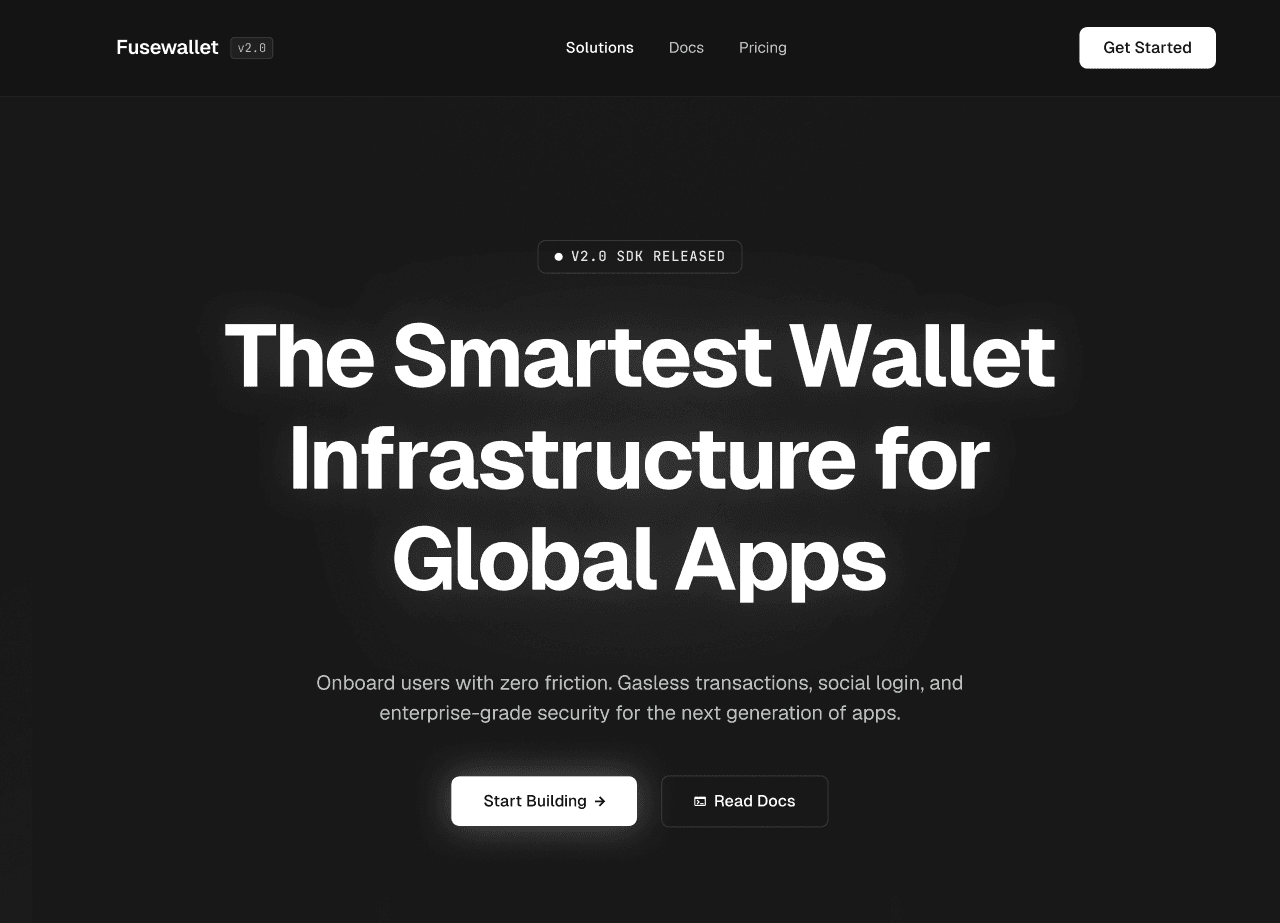
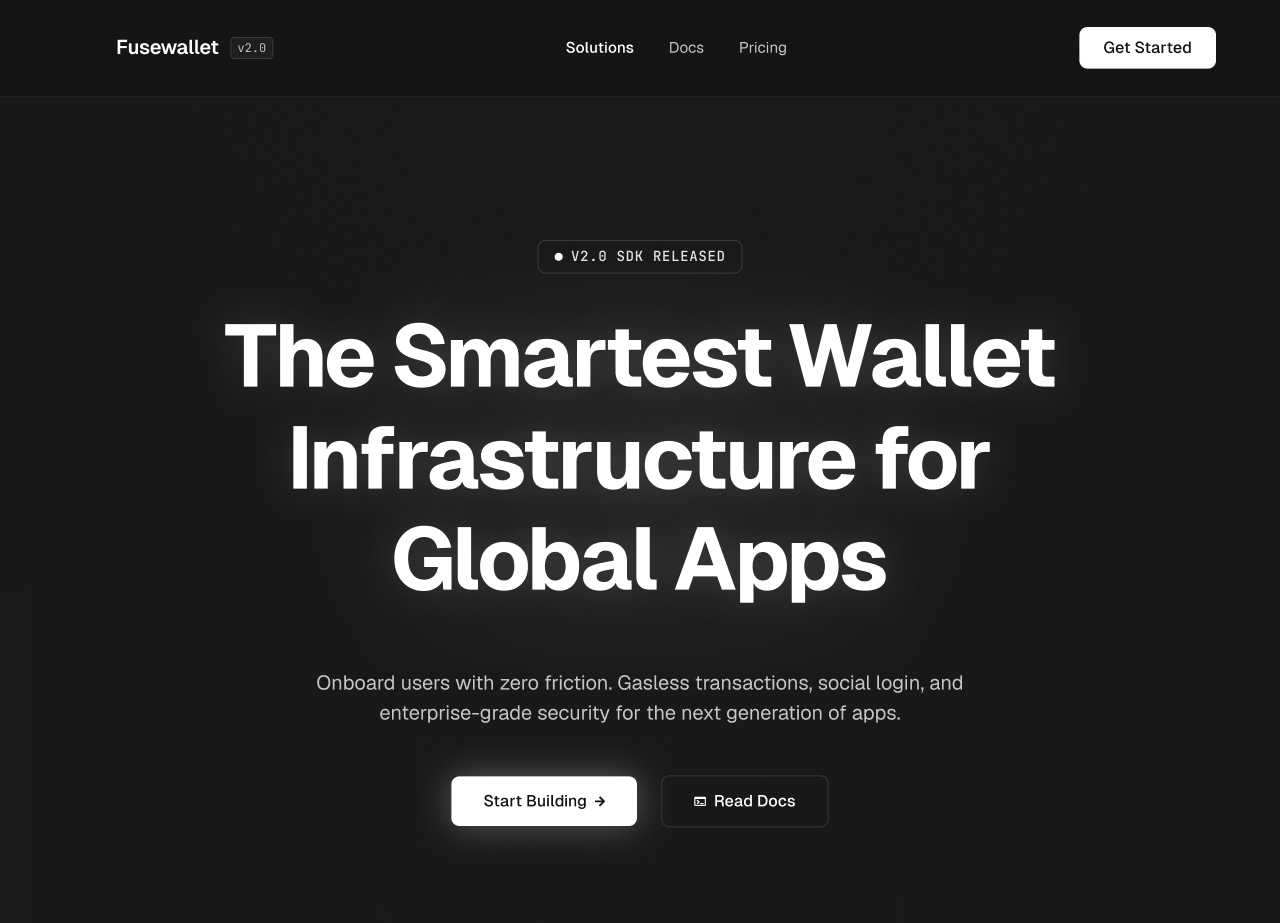
Consumer crypto apps lose users when the first task is wallet setup. Install a wallet, save a seed phrase, buy gas, bridge funds, approve a fee, wait for confirmation. That is infrastructure work, not product value. FuseWallet puts that complexity behind the app. Developers get embedded smart wallets, gas sponsorship, session key controls, billing visibility, and hosted controls. End users sign in with familiar methods and complete actions without holding native gas tokens.
FuseWallet hero section presenting gasless wallet infrastructure for consumer apps
Embedded wallets, sponsorship policy, and operational control in one product

A Wallet Infrastructure Layer for App Developers

The product is not just a wallet UI. FuseWallet combines three pieces that consumer teams usually have to stitch together: an embedded wallet SDK, Paymaster-based gas sponsorship, and a developer control center. That structure matters because each layer solves a different failure point. The SDK removes wallet creation friction. The Paymaster lets apps decide which actions should be gasless. The dashboard gives operators the visibility needed to manage spend, rule changes, failed operations, and app-level configuration.
  • Embedded Smart Wallets: Users can create application-scoped smart wallets through email, OAuth, or passkeys instead of external wallet setup.
  • Gas Sponsorship: Developers fund credits and define when the Paymaster should sponsor transactions for specific users or actions.
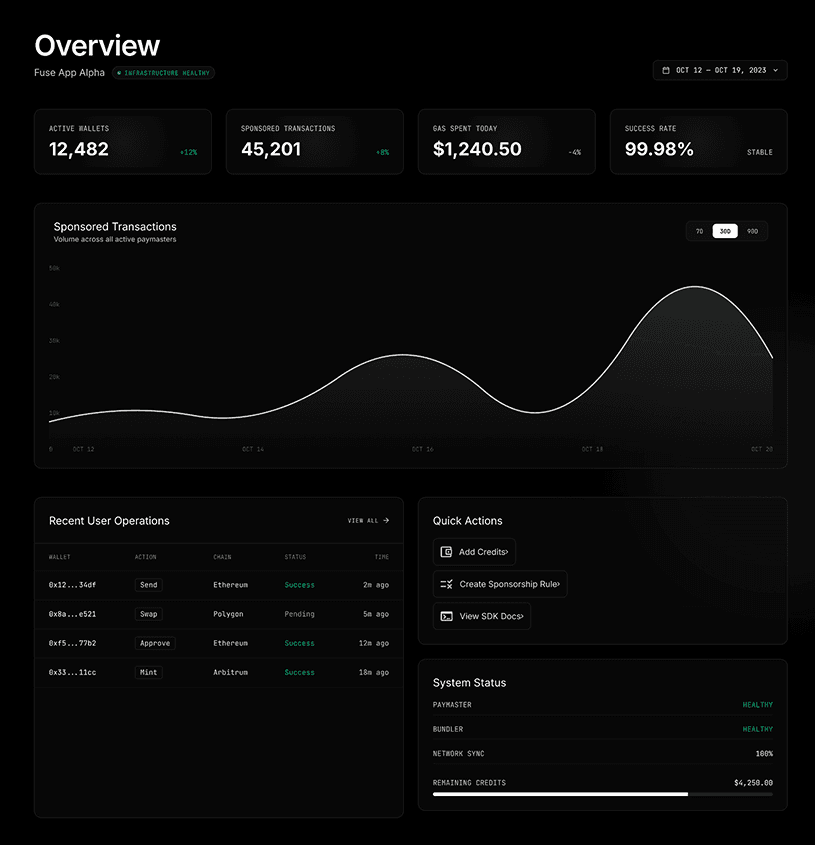
  • Developer Control Center: Teams monitor active wallets, sponsored operations, gas spend, credit balance, and infrastructure health from one dashboard.
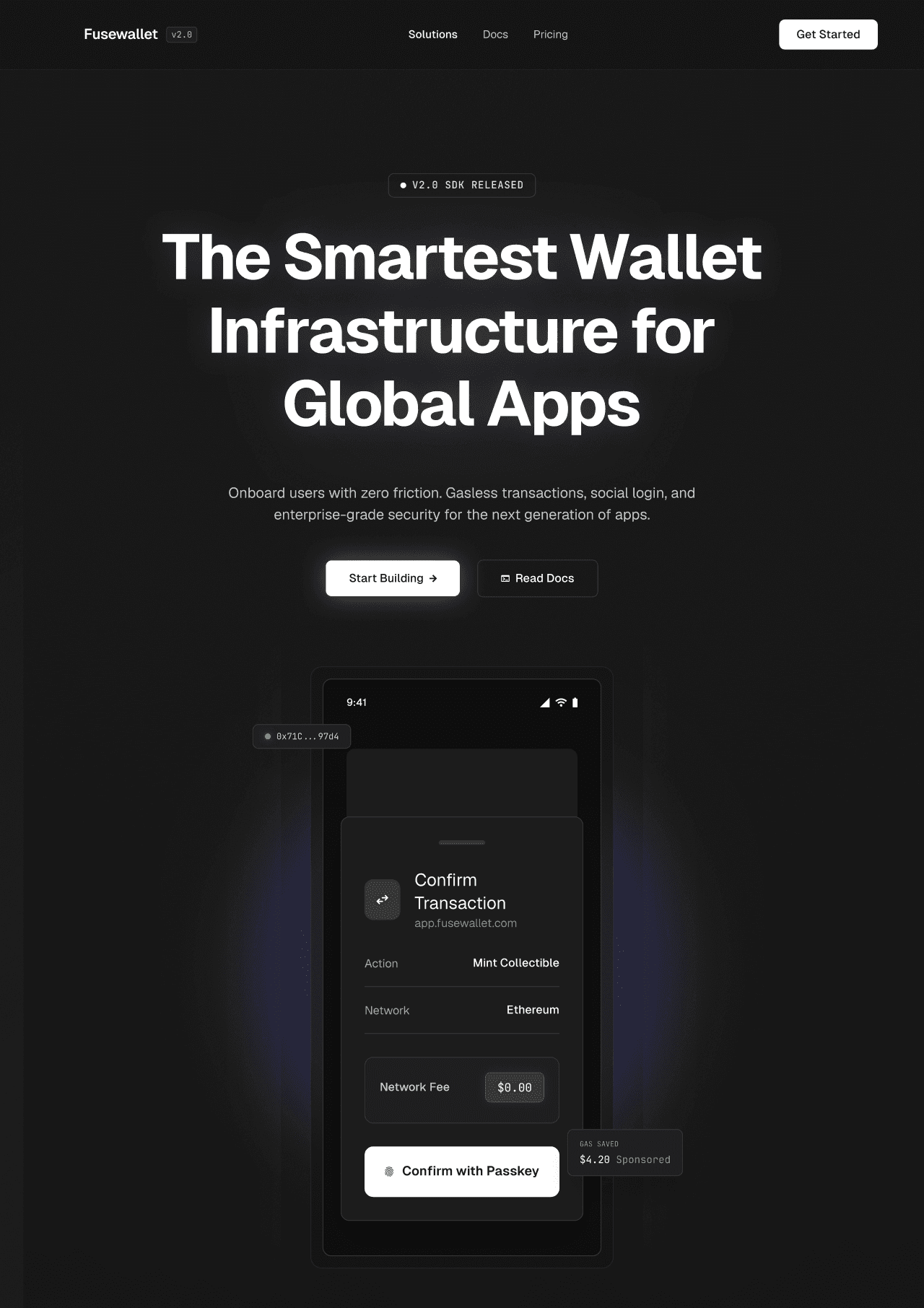
FuseWallet landing page showing developer-focused gasless wallet positioning
From new app to SDK credentials in a guided setup

Developer Onboarding Without Infrastructure Drag

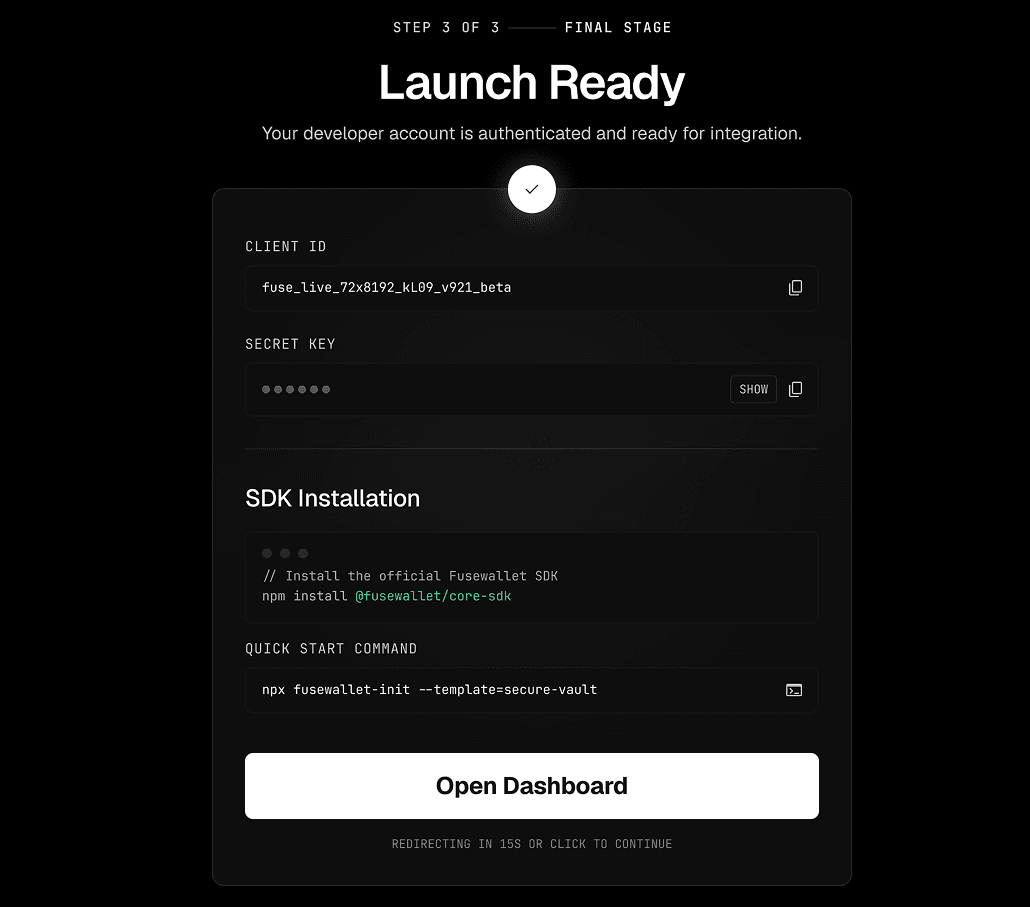
Developer onboarding is built around the first successful integration. FuseWallet asks for the product decisions first: app identity, target chain, authentication methods, sponsorship mode, and recovery preference. The final step gives developers credentials and an SDK snippet so they can move from configuration to implementation. Account abstraction details are still available, but they are staged behind the workflow instead of blocking setup.
  • Create App: Capture app name, category, icon, and preferred network so the dashboard can create a scoped integration context.
  • Configure UX: Choose login methods, sponsorship defaults, session key behavior, and recovery options before production use.
  • Launch Ready: Expose client credentials and SDK instructions only after the app has enough policy context to be useful.
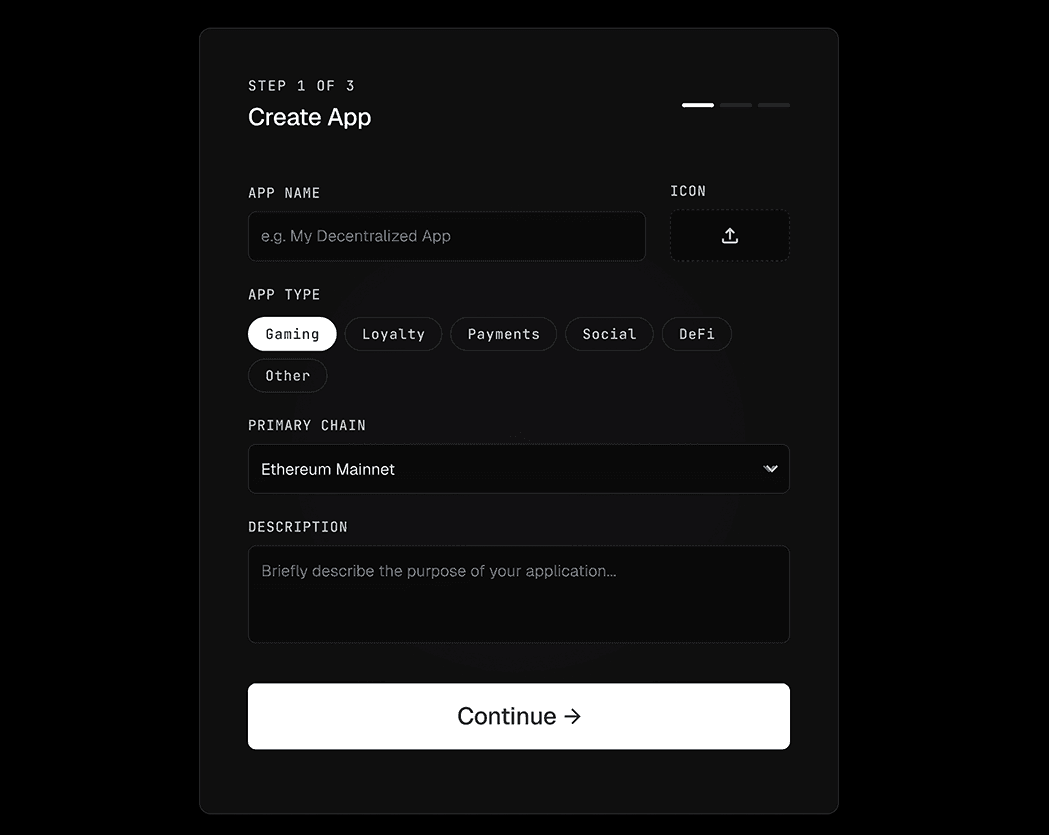
FuseWallet onboarding step for creating an application
FuseWallet onboarding step for configuring login and gasless wallet UX
FuseWallet launch-ready onboarding step with client credentials and SDK instructions
FuseWallet onboarding step for creating an application
ERC-4337, Bundlers, Paymasters, and UserOperations

How Gasless Transactions Work

FuseWallet's core transaction model is based on ERC-4337 account abstraction. Instead of asking an end user to submit a normal wallet transaction with native gas, the SDK constructs a UserOperation. A bundler packages the operation and submits it to the EntryPoint contract. A Paymaster validates whether the developer's sponsorship policy covers the action, then pays gas from the developer-funded balance. This architecture lets consumer apps hide native gas while keeping policy enforcement explicit. A gaming app can sponsor item mints for new users. A loyalty platform can sponsor reward claims. A prediction app can sponsor first deposits. The user experience stays simple, while the developer retains spend limits and action-level control.

01

Smart Account Factory

Creates deterministic smart account addresses for users and supports app-scoped onboarding without seed phrase exposure.

02

UserOperation Pipeline

The SDK builds intent objects that can be validated, sponsored, bundled, and executed without requiring user-held gas.

03

Paymaster Rules

Sponsorship is checked against audience, action, network, cost, and budget limits before gas is paid.

04

Bundler Integration

Bundlers estimate gas, batch UserOperations, submit to EntryPoint, and return transaction state to the dashboard.

05

Session Keys

Scoped keys can approve repeated low-risk actions for a limited time without prompting the user on every click.

06

Billing Ledger

Sponsored gas is translated into credits so developers can understand cost, forecast burn, and reconcile invoices.

A command center for wallets, gas spend, and infrastructure health

Developer Dashboard

The developer dashboard turns wallet infrastructure into an operational surface. A developer or product operator should be able to answer the important questions quickly: how many wallets are active, how many transactions were sponsored, how much gas was spent, what is the success rate, and whether the Paymaster or bundler needs attention. The dashboard layout prioritizes live system confidence over decorative analytics. KPI cards summarize current usage, the activity feed exposes recent UserOperations, and infrastructure status panels make Paymaster, bundler, and chain sync state visible before users start reporting issues.
FuseWallet developer dashboard with wallet metrics, sponsored operations, and system health
Turning gas policy into configurable product logic

Sponsorship Rules That Product Teams Can Understand

The hardest part of gasless UX is not paying gas once. It is deciding when gas should be paid, who qualifies, what actions are allowed, and how much the app is willing to spend. FuseWallet treats sponsorship as policy, not as a hidden backend flag. The rules screen is designed to make those policies readable. Developers can define audience, contract actions, chain scope, per-user limits, daily budgets, and fallback behavior. A plain-language summary and cost preview help non-protocol stakeholders understand what the rule will do before it is enabled.
  • Audience Targeting: Rules can apply to all users, new users, returning users, allowlists, or app-defined user segments.
  • Action Scope: Teams can sponsor specific flows such as minting, claims, transfers, swaps, approvals, or custom contract calls.
  • Budget Limits: Per-user caps, per-transaction maximums, daily limits, monthly limits, and low-credit warnings reduce runaway spend.
  • Failover Behavior: When a rule is exhausted, apps can fail gracefully, ask users to pay gas, or prompt operators to add credits.
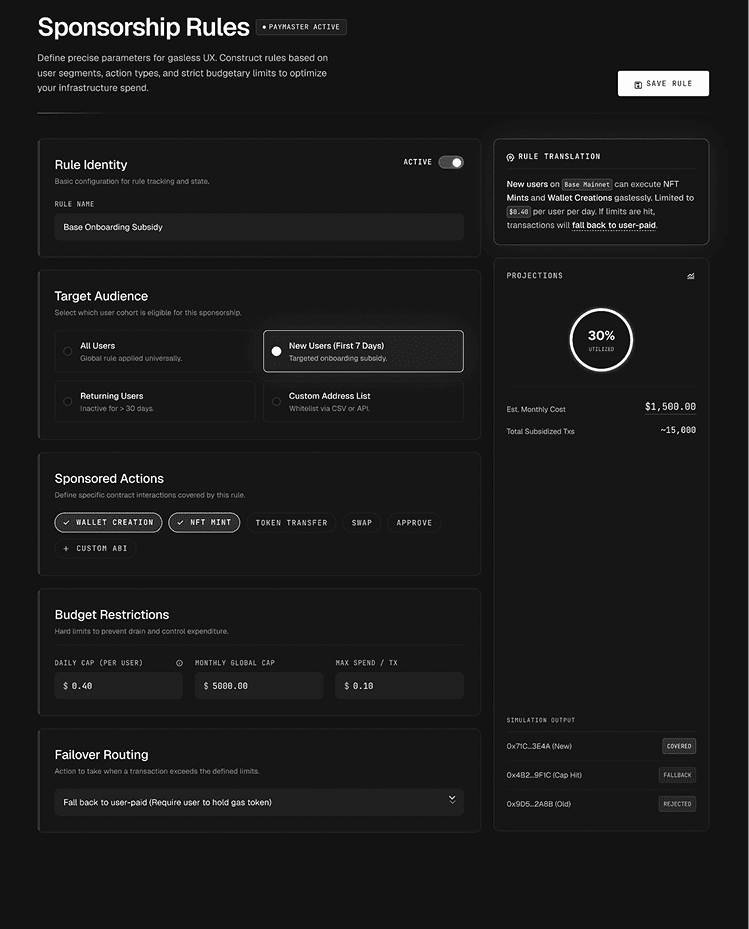
FuseWallet sponsorship rules screen with gas policy controls and cost preview
Making sponsored transaction costs predictable

Billing Built Around Gas Credits

Gasless infrastructure still has a cost. The product challenge is making that cost predictable enough for teams to operate. FuseWallet uses a credit-based model where developers fund an account, each sponsored transaction deducts credits based on actual gas cost and platform margin, and the dashboard shows burn rate, available balance, invoices, and recharge controls. This model makes gas sponsorship feel closer to API usage billing than wallet management. Developers do not need to forecast raw gas units by chain every day. They can monitor credits, watch usage trends, set warnings, and reconcile spend against app activity.
  • Credit Balance: The dashboard shows available credits, current month usage, spend forecast, and remaining runway.
  • Usage Ledger: Sponsored transactions create billing events that can be traced back to app, user, action, chain, and rule.
  • Plan and Recharge Controls: Teams can manage plan level, payment method, auto-recharge, low-credit alerts, and invoices in one place.
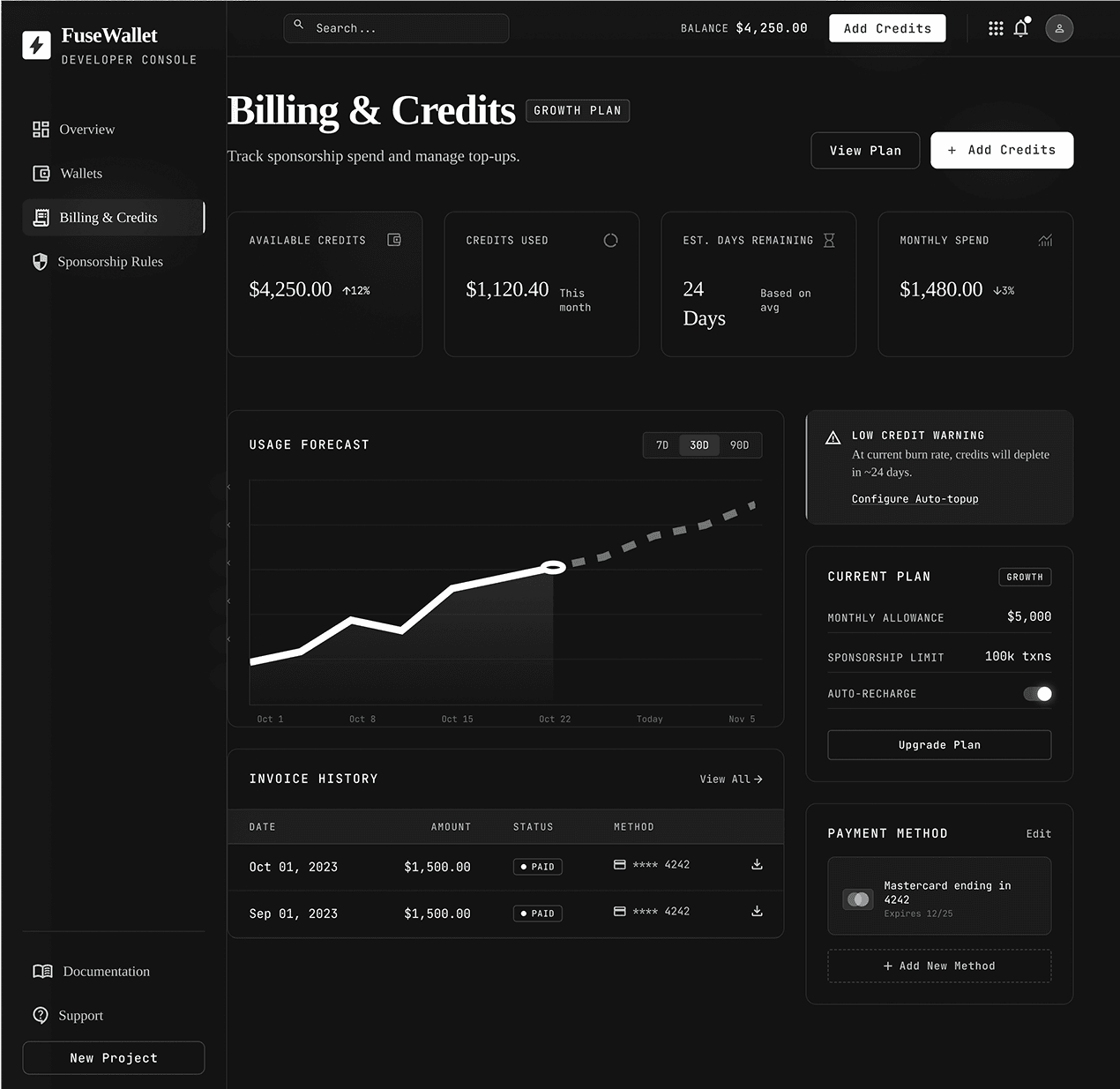
FuseWallet billing and credits dashboard with spend, plans, invoices, and usage trends
Metrics

Current Progress

FuseWallet is presented as an active build, not a completed public launch. The case study avoids fabricated adoption metrics and focuses on the product architecture, developer experience, gas sponsorship model, dashboard controls, and implementation direction already defined. The next workstream is to harden the SDK and backend contracts around real integration paths: account creation, UserOperation submission, Paymaster validation, session key scope, billing ledger entries, and live dashboard state.

May 2026
Started
Product strategy, technical architecture, and UI work began in May 2026.
In Build
Status
Dashboard, SDK, Paymaster flow, and implementation planning are in progress.
5
Core Workflows
Onboarding, wallet creation, sponsorship rules, billing credits, and dashboard monitoring.
Pending
Metrics
No production usage metrics are included until real product data exists.
Project Gallery

Visual showcase

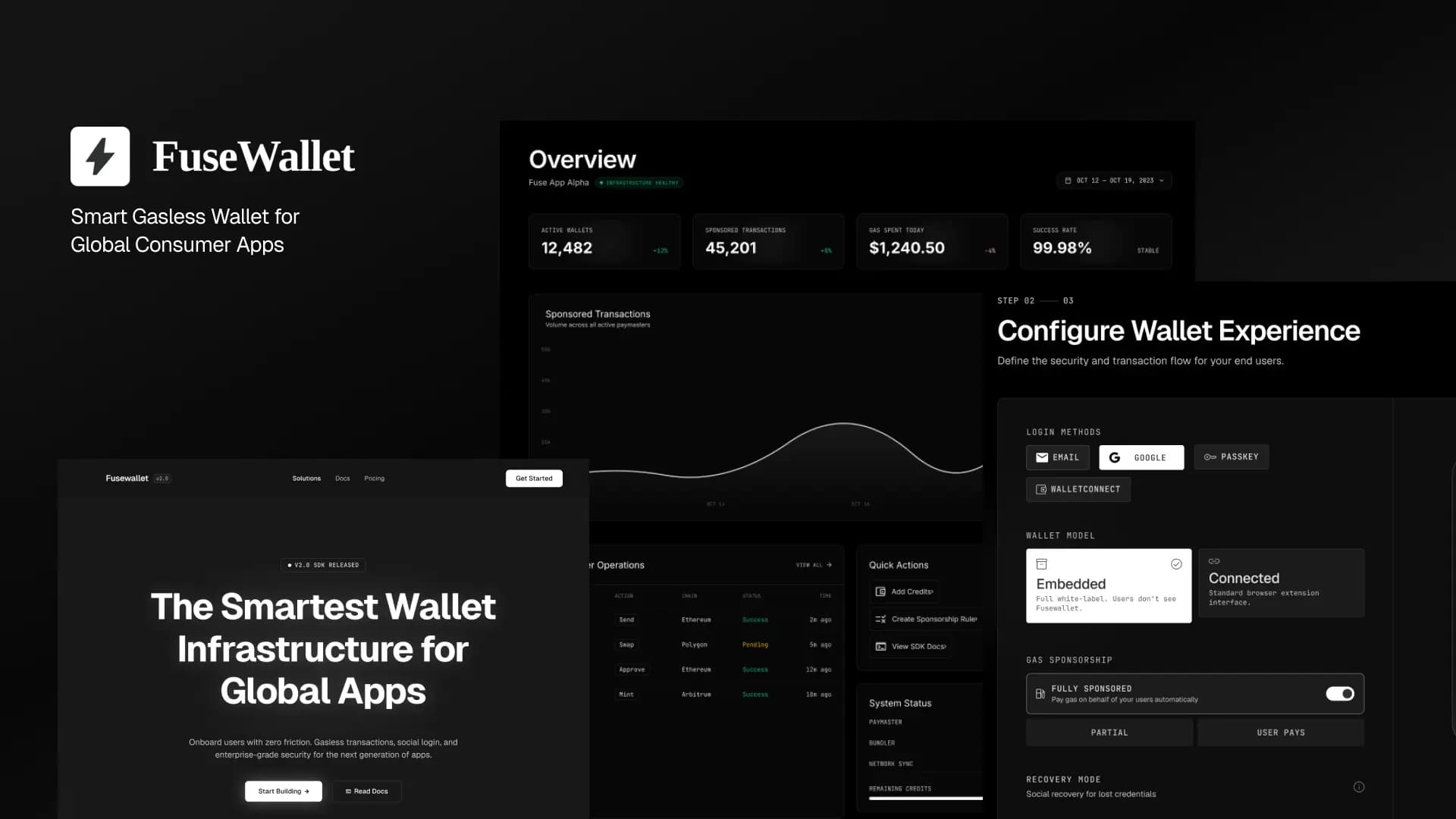
Gallery image 1
1 / 8
FuseWallet - ChainScore Labs | ChainScore Labs