Lykly
Prediction markets with trading, context, and an ideas feed in one workspace.

About This Project
Lykly is a prediction market product in progress for political, macro, crypto, sports, culture, climate, and economics outcomes. The product combines market discovery, Yes/No event contracts, probability movement, order entry, market context, an ideas feed, and studio tools for market creation. ChainScore Labs is building the product foundation across information architecture, trading surfaces, feed mechanics, and backend workflow models.
Client
Timeline
Technologies
A Prediction Market Built Around Intelligence
The Product Surfaces
The early product architecture is organized around five surfaces that cover the complete user journey: discover the venue, scan markets, inspect a market, read or publish ideas, and create or manage market listings.
Landing Page
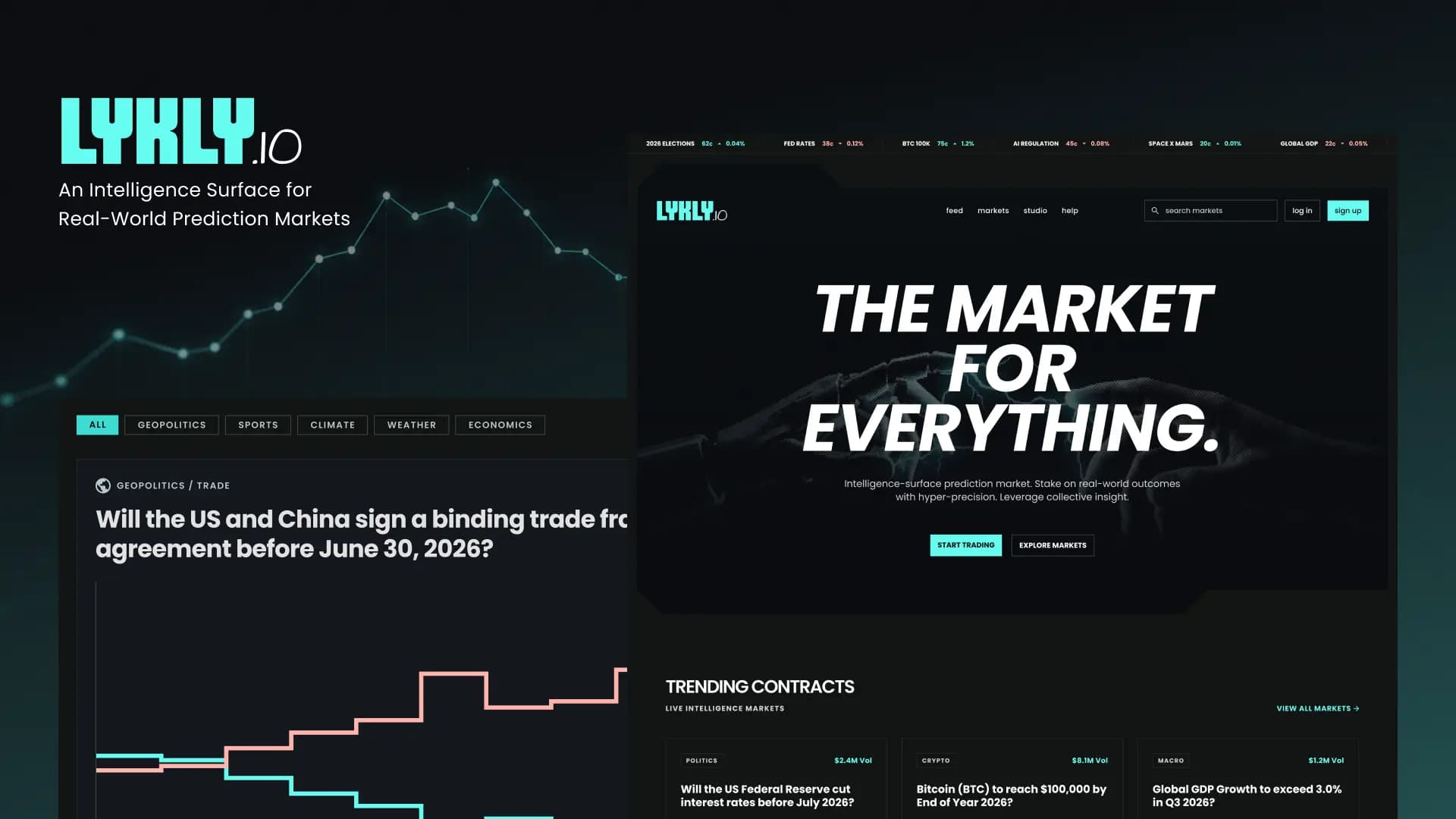
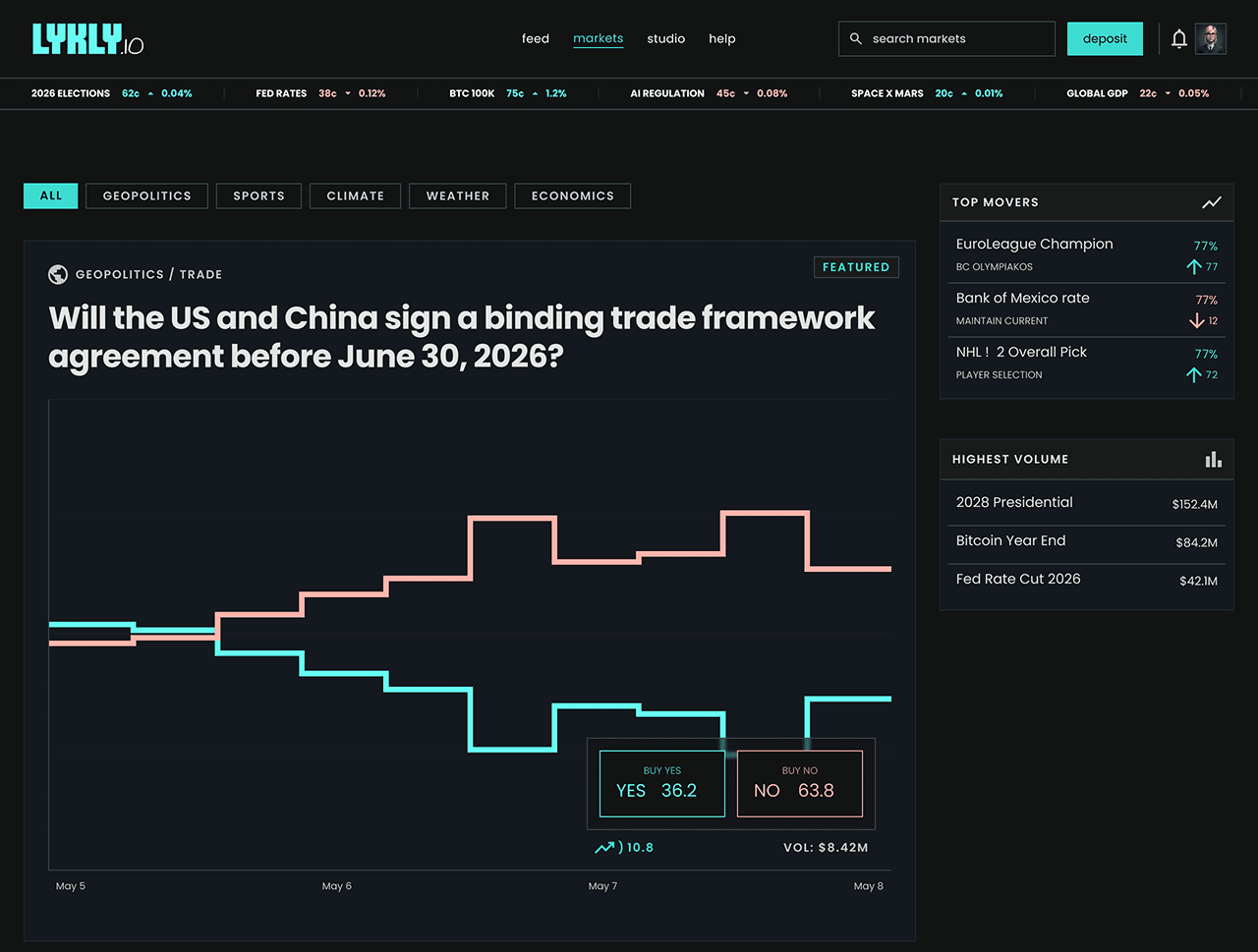
A dark, grid-driven first impression with the core message: The market for everything. It introduces live contracts, trending markets, and direct entry points into trading.
Markets Index
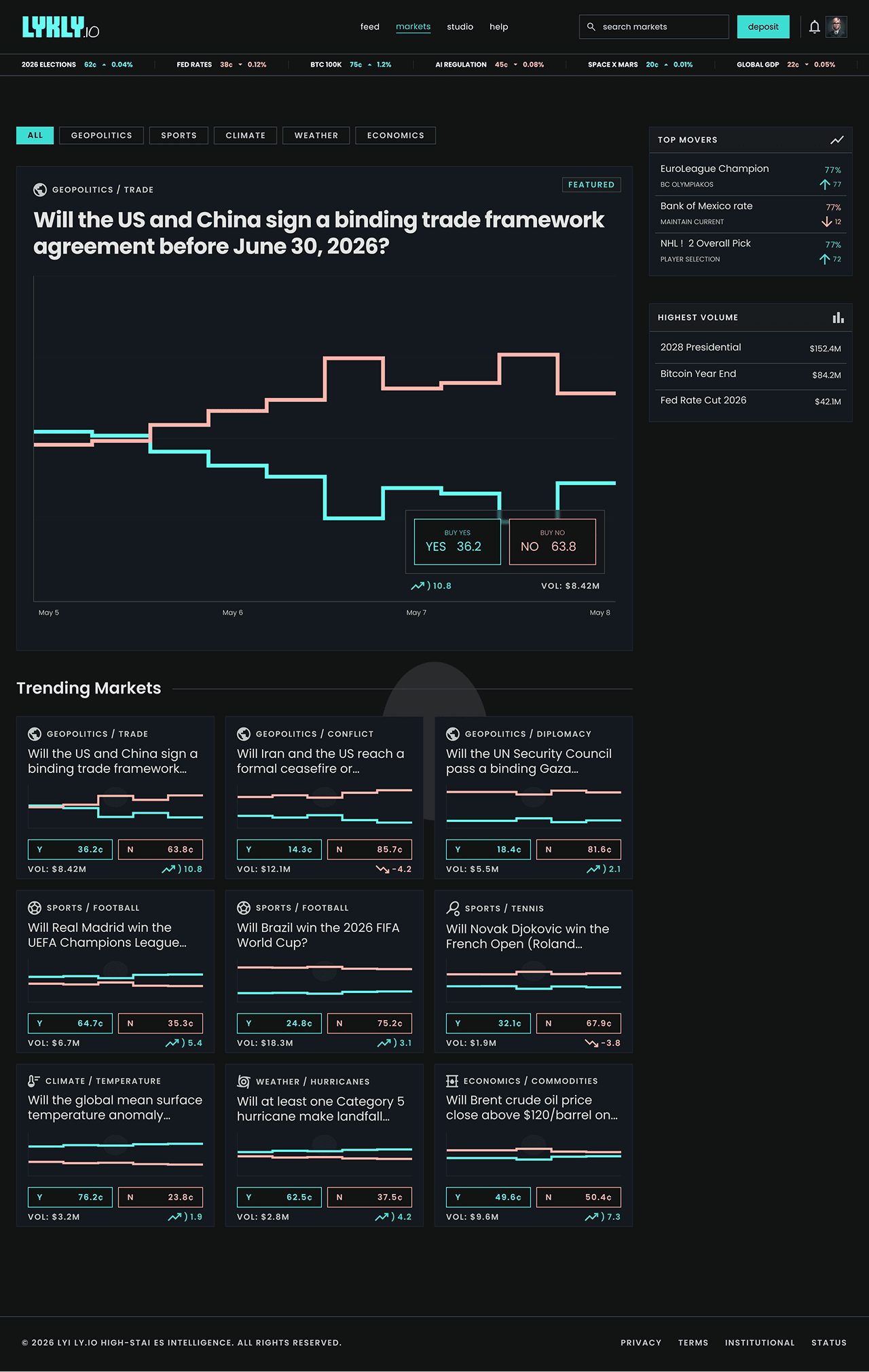
A prediction-market version of a trading pairs list, organized by categories and narratives rather than raw tickers.
Single Market Page
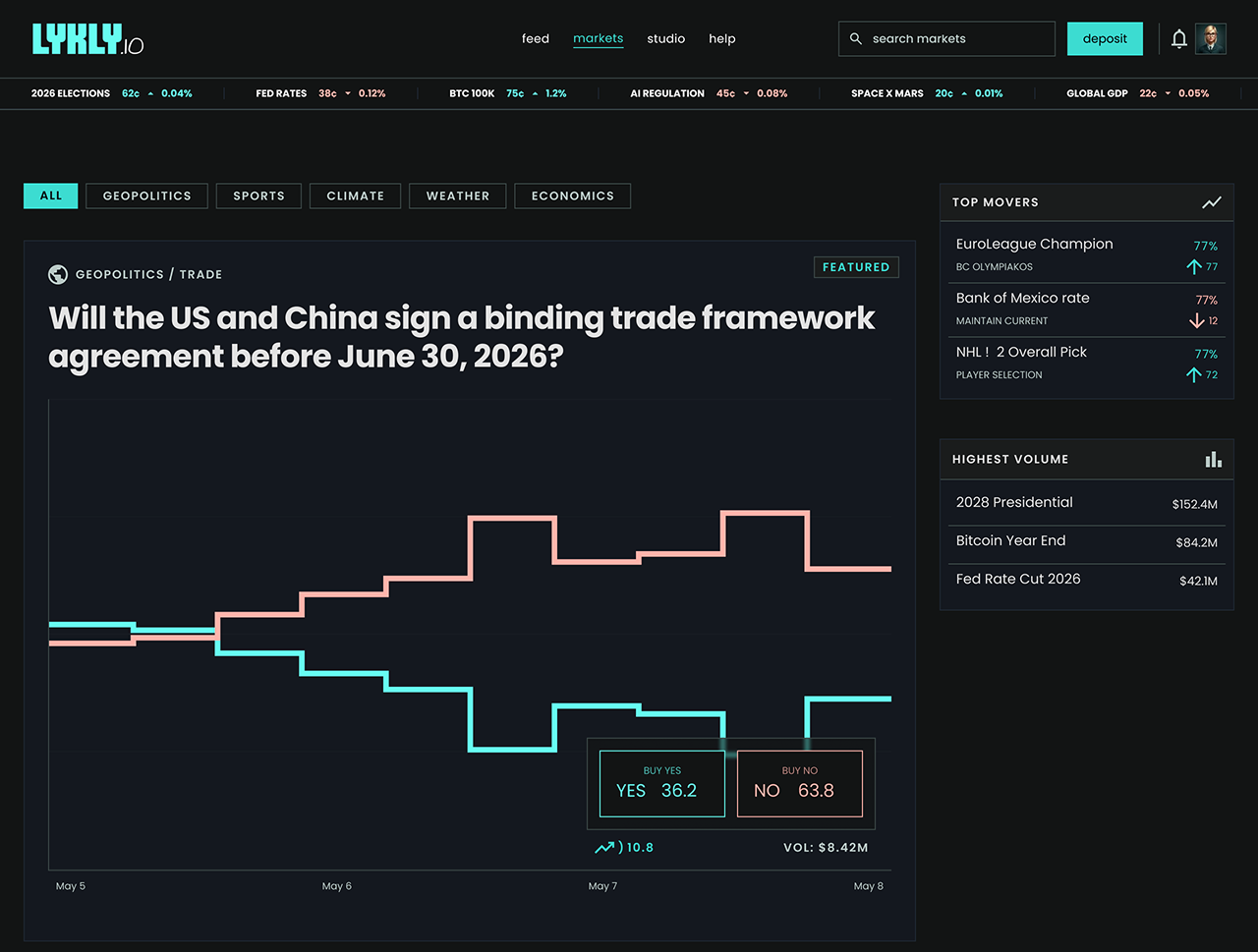
The main trading view with the market question, resolution rules, probability chart, order book feel, trade ticket, and related ideas.
Ideas Feed
A short-form research feed where posts attach directly to markets and can open a preconfigured trade flow.
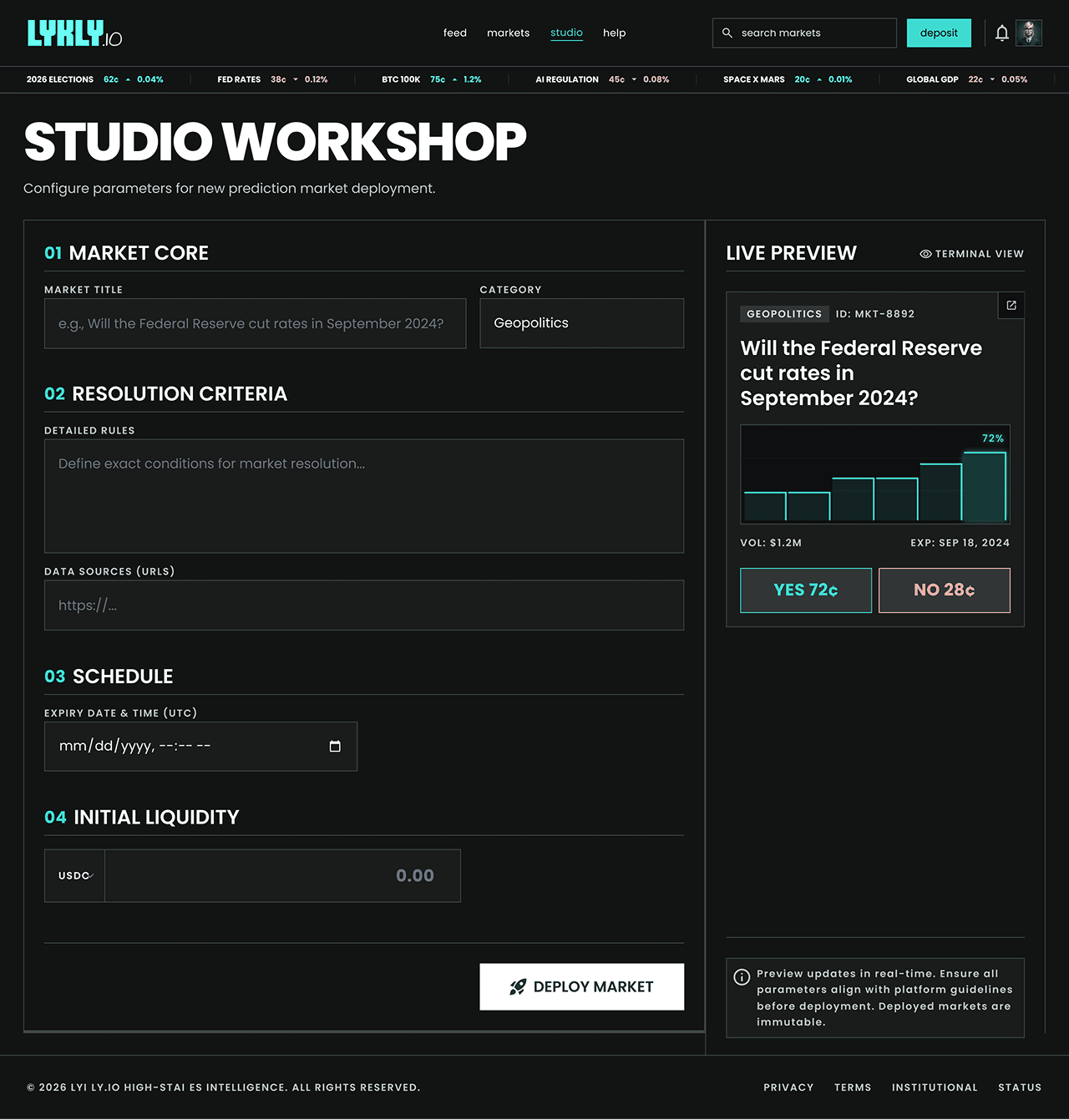
Studio
An operator and institutional workflow for drafting markets, defining resolution criteria, reviewing risk, and publishing collections.
Markets Index
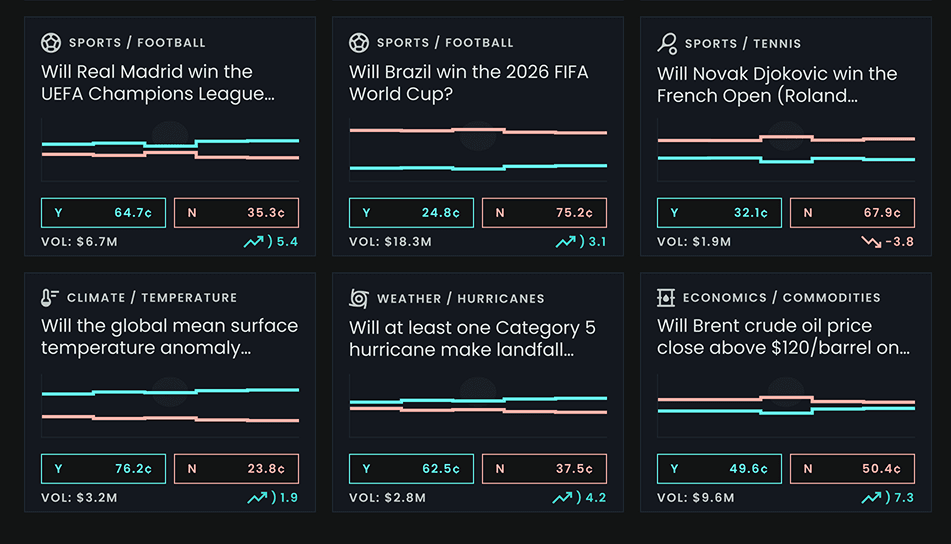
- Narrative Categories: Markets are grouped by themes users already think in, rather than by internal IDs or contract symbols.
- Probability Movement: Cards are planned to show recent probability changes so traders can quickly spot momentum and reversals.
- Liquidity Signals: Volume, spread, and recent activity should be visible before the user opens a full market page.
Single Market Trading View
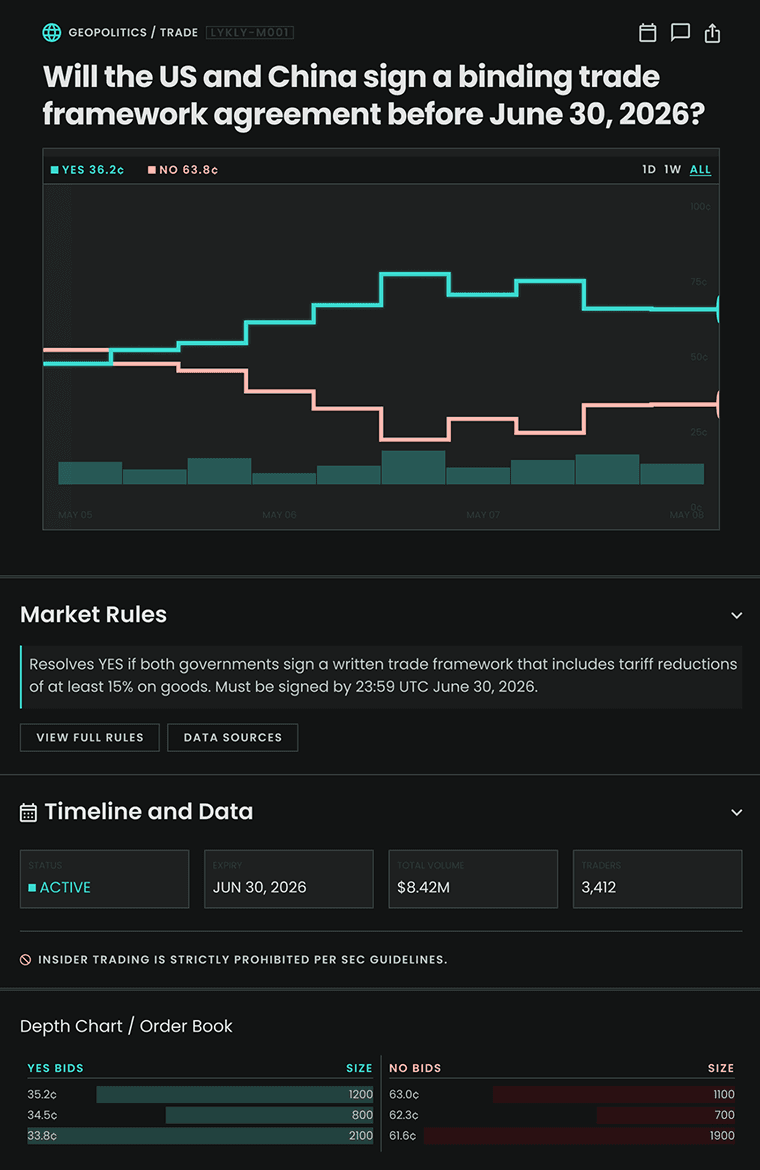
- Event Contract Header: Question, category tags, resolution source, settlement criteria, and status are visible before the user trades.
- Probability Chart: A time-series view shows how market expectations have changed around news, data releases, or social momentum.
- Trade Ticket: The ticket supports Yes/No selection, price in cents, stake sizing, and a preview of maximum loss and payout.
Ideas Feed
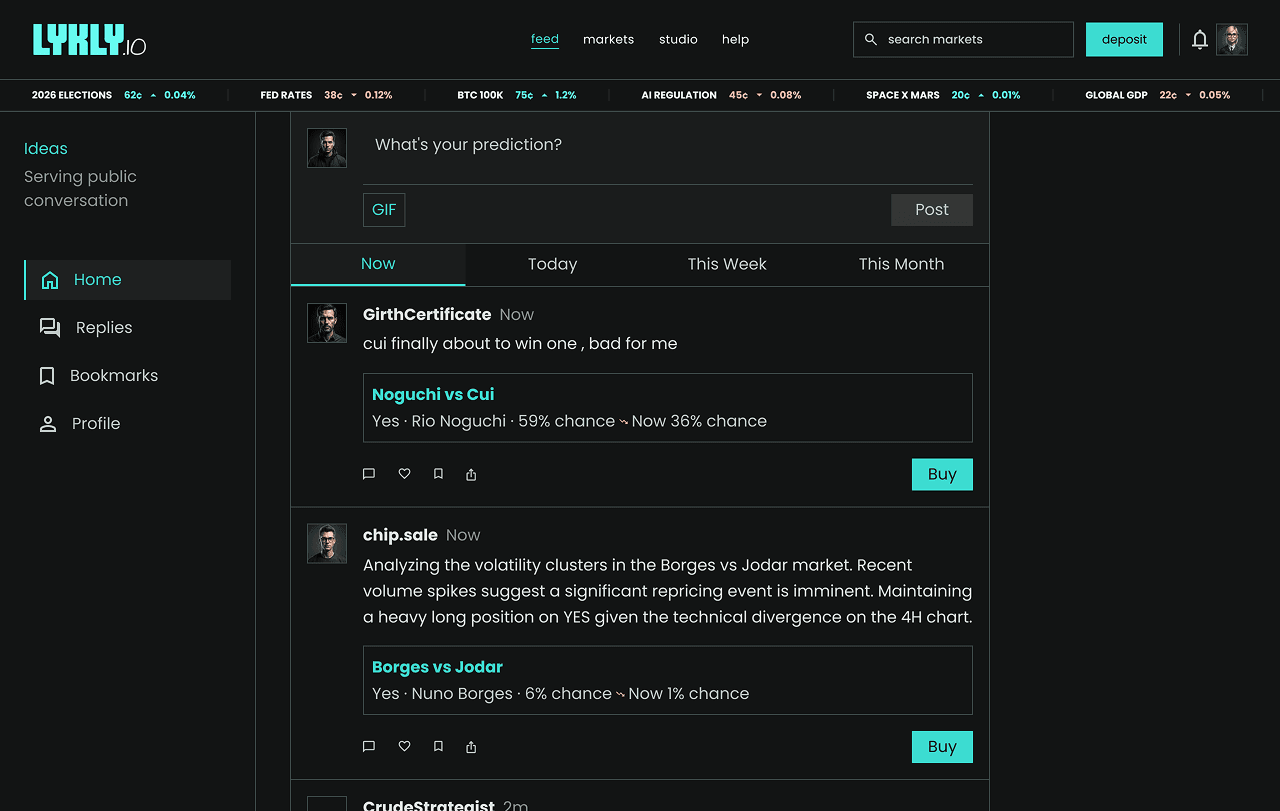
- Market-Aware Posts: Every idea can reference one or more markets, keeping commentary attached to tradable outcomes.
- Probability Snapshots: Posts can record the implied odds at publication so later readers can see whether the market moved with or against the thesis.
- Trade This: Idea cards can open a prefilled trading flow, reducing the gap between reading a thesis and placing an order.
Market Mechanics
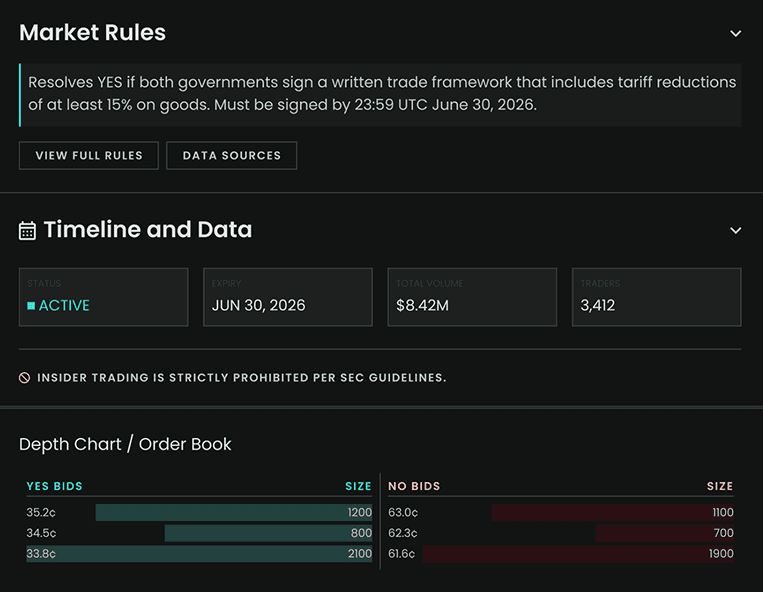
- Binary Payoff: The MVP market type is Yes/No, with prices in cents acting as implied probability.
- Resolution Rules: Each market needs a canonical source, a resolution date, fallback handling, and clear edge-case language.
- Lifecycle States: Markets move through draft, scheduled, trading, halted, resolved, and archived states.
- CLOB Direction: The intended trading model is a central limit order book that can support tight spreads and market maker APIs.
Studio, Risk, and Operator Controls
- Market Creation: Operators can draft questions, assign categories, define data sources, and attach resolution playbooks.
- Exposure Limits: Future controls can cap positions per user, side, market, and category.
- Manual but Rules-Based Resolution: For the early product, resolution can be operator-driven while still following strict written criteria and audit logging.
Current Progress
Lykly is not being presented as a completed public launch. The project started in April 2026 and is currently in active design and build. The useful case-study angle today is the product architecture: how the market surfaces, ideas feed, contract model, and operator workflows fit together before the final screenshots and production metrics are available.
Visual showcase