A governance token is a digital asset that confers voting rights within a Decentralized Autonomous Organization (DAO) or a specific blockchain protocol. It is the primary mechanism for implementing on-chain governance, allowing a project to be managed collectively by its user base rather than a centralized team. Holders can typically vote on proposals that alter the protocol's parameters, treasury allocations, fee structures, or even its core codebase. Prominent examples include UNI for Uniswap, MKR for MakerDAO, and AAVE for the Aave lending protocol.

Glossary
Governance Token
A governance token is a cryptocurrency that grants its holders the right to vote on proposals that determine the future development, parameters, and treasury management of a decentralized protocol or DAO.
definition
BLOCKCHAIN MECHANISM
What is a Governance Token?
A governance token is a cryptographic asset that grants its holder the right to participate in the decision-making process of a decentralized protocol or organization.
The voting power of a participant is usually proportional to the number of tokens they hold or have delegated to them, a model known as token-weighted voting. Some systems incorporate mechanisms like vote delegation, where users can lend their voting power to experts, and time-weighted voting, where the duration tokens are locked influences their weight. Proposals are submitted on-chain, and votes are cast directly from a user's wallet, with the results automatically executed by smart contracts if approved. This creates a transparent and auditable decision-making ledger.
Beyond basic voting, governance tokens can enable more sophisticated frameworks. These include quadratic voting to reduce whale dominance, conviction voting for gauging sustained support, and the use of non-transferable "soulbound" tokens to represent reputation. The ultimate goal is to align the incentives of token holders with the long-term health and success of the protocol, making them true stakeholders. However, challenges such as voter apathy, low participation rates, and potential governance attacks by large holders remain active areas of research and development within the ecosystem.
how-it-works
MECHANISM
How Governance Tokens Work
A technical breakdown of the on-chain mechanisms that transform a governance token from a simple asset into a functional instrument for decentralized decision-making.
A governance token is a blockchain-based asset that grants its holder the right to participate in the decision-making processes of a decentralized protocol or organization, typically through on-chain voting. This mechanism transforms a financial instrument into a functional tool for decentralized governance, enabling token holders to propose, debate, and vote on changes to the protocol's parameters, treasury allocations, or core code. The weight of a user's vote is often directly proportional to the number of tokens they commit or "stake" to the voting process, a model known as token-weighted voting.
The core technical workflow involves a smart contract that manages proposal submission, voting periods, and execution. A user submits a formal proposal—such as adjusting a fee, adding a new collateral asset, or upgrading a contract—which is then subject to a defined voting window. During this period, token holders cast their votes, with outcomes determined by a predefined quorum (minimum participation) and majority threshold. Successful proposals are often executed automatically by the smart contract, creating a trustless and transparent governance cycle without centralized intermediaries.
Beyond simple yes/no votes, advanced governance systems employ mechanisms like delegate voting, where holders can delegate their voting power to experts or representatives, and quadratic voting, which aims to reduce the influence of large token holders (whales). These tokens also frequently serve a dual purpose, providing both governance rights and utility within the ecosystem, such as fee discounts or staking rewards. This fusion of utility and control is central to the tokenomics of many Decentralized Autonomous Organizations (DAOs) and DeFi protocols like Uniswap (UNI) and Compound (COMP).
The security and integrity of a governance system depend heavily on its design. Vulnerabilities can arise from voter apathy, where low participation allows a small group to control outcomes, or from governance attacks, where an entity acquires enough tokens to pass malicious proposals. To mitigate this, protocols may implement timelocks to delay execution, allowing the community to react to passed proposals, or multisig guardian roles for emergency interventions. The balance between decentralization, security, and efficient decision-making remains a central challenge in governance token design.
key-features
MECHANISMS & FUNCTIONS
Key Features of Governance Tokens
Governance tokens are cryptographic assets that confer voting power within a decentralized protocol or DAO. Their core features define how stakeholders interact with and control the system.
01
Voting Rights & Proposal Power
The primary function is to grant holders the right to vote on on-chain governance proposals. This includes decisions on:
- Protocol parameters (e.g., fee adjustments, collateral ratios)
- Treasury management (e.g., fund allocation, grants)
- Technical upgrades (e.g., smart contract changes)
- Working group elections (e.g., electing core contributors or committees) Voting weight is typically proportional to the amount of tokens staked or delegated.
02
Delegation & Staking
To reduce voter apathy and enable expert governance, many systems allow token delegation. Holders can delegate their voting power to a trusted third party or a delegate who votes on their behalf. Staking mechanisms are often used to lock tokens, which can:
- Signal long-term commitment
- Earn staking rewards
- Be required to submit governance proposals (a proposal deposit)
- Prevent Sybil attacks by increasing the cost of malicious voting.
03
Economic & Utility Value
Beyond governance, these tokens often embed economic utility to drive network participation and value accrual. Common utilities include:
- Fee capture or revenue sharing: A portion of protocol fees may be distributed to stakers.
- Access rights: Tokens may be required to access premium features or services.
- Collateral: Used as collateral in DeFi lending protocols.
- Liquidity mining incentives: Distributed to users who provide liquidity to key trading pairs. This dual nature (governance + utility) is central to their valuation.
04
Treasury Control
A critical governance function is the collective control over the protocol treasury or DAO treasury, which holds the project's native tokens and other assets (e.g., stablecoins, ETH). Token holders vote on:
- Budget approvals for development, marketing, and operations.
- Grant funding for ecosystem projects and public goods.
- Asset allocation and investment strategies.
- Token buybacks and burns to manage supply. This transforms token holders into de facto stewards of the protocol's financial resources.
05
On-Chain vs. Off-Chain Governance
Governance execution occurs on a spectrum:
- On-Chain Governance: Votes are executed automatically by smart contracts (e.g., Compound, Uniswap). Changes are binding and immutable once passed.
- Off-Chain Governance: Discussions and signaling happen on forums (e.g., Discourse, Snapshot) before a core team implements changes (e.g., early Ethereum EIP process).
- Hybrid Models: Many protocols use Snapshot for gas-free sentiment voting, followed by on-chain execution for binding decisions. Each model trades off speed, cost, and security.
06
Token Distribution & Supply Models
The initial and ongoing distribution of tokens is a foundational governance feature that impacts decentralization.
- Initial Distribution: Often via fair launch, venture capital rounds, airdrops to early users, or liquidity mining.
- Supply Models: Can be fixed supply (deflationary, like UNI) or have inflationary emissions to fund ongoing incentives (like COMP).
- Vesting Schedules: Used for team and investor tokens to align long-term incentives. The distribution model directly influences voter concentration and potential centralization risks.
examples
PROTOCOL CASE STUDIES
Examples of Governance Tokens
Governance tokens are the native assets of decentralized protocols, granting holders voting rights on key decisions. Below are prominent examples from major DeFi and DAO ecosystems.
ecosystem-usage
GOVERNANCE TOKEN
Ecosystem Usage & Applications
A governance token is a cryptographic asset that grants its holder the right to participate in the decision-making process of a decentralized protocol or DAO. This section details the primary mechanisms and applications of these tokens within blockchain ecosystems.
01
Voting on Protocol Upgrades
Token holders vote on on-chain proposals to modify core protocol parameters, such as fee structures, reward distributions, or smart contract upgrades. This is the foundational use case, enabling decentralized, community-led evolution.
- Example: Uniswap (UNI) holders vote on fee switches and treasury allocations.
- Mechanism: Votes are often weighted by the number of tokens staked or delegated, with proposals executed automatically upon passing a quorum.
02
Treasury Management
Governance tokens control access to the protocol's treasury, a pool of assets (often native tokens and stablecoins) funded by protocol revenue. Holders decide on budget allocations for grants, partnerships, and operational expenses.
- Example: Compound's DAO treasury, managed by COMP holders, funds development grants and bug bounties.
- Process: Proposals specify recipient addresses and amounts, with execution requiring a successful vote.
03
Delegation & Political Systems
To reduce voter apathy and consolidate expertise, token holders can delegate their voting power to other addresses. This creates a representative system where delegates (or "delegates") research proposals and vote on behalf of their constituents.
- Key Concept: Vote-escrowed tokens (veTokens), like Curve's veCRV, lock tokens to gain boosted voting power, aligning long-term incentives.
- Outcome: Enables the emergence of professional governance participants and delegate platforms.
04
Parameter Tuning & Risk Management
In DeFi protocols, governance is used for ongoing parameter adjustments critical to system safety and efficiency. This includes setting collateral factors, loan-to-value ratios, oracle selections, and asset whitelisting/blacklisting.
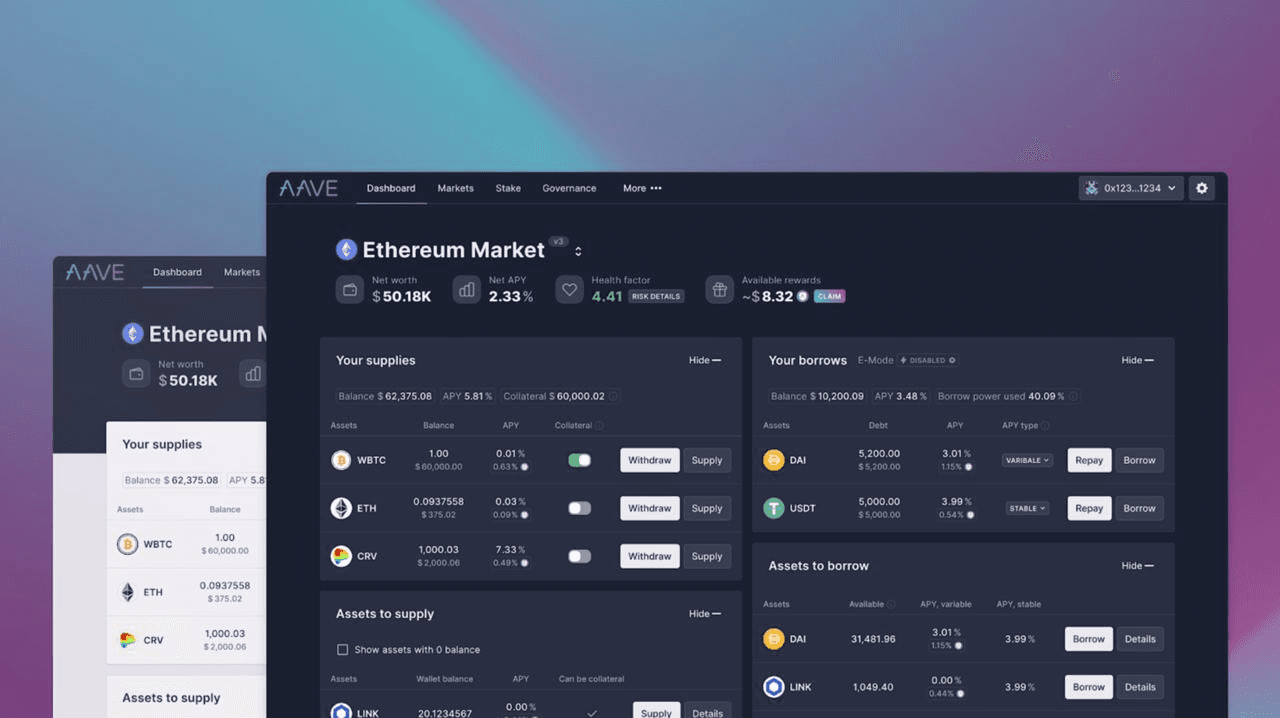
- Example: Aave (AAVE) governance votes on which assets to add as collateral and their associated risk parameters.
- Importance: These decisions directly impact the protocol's financial risk and capital efficiency.
05
Fee Distribution & Value Accrual
Some protocols use governance to decide how protocol-generated fees are distributed. This can create a direct revenue-sharing model, where fees are used to buy back and burn tokens, distribute dividends, or reward liquidity providers.
- Mechanism: A "fee switch" proposal activates the collection and distribution of trading fees.
- Goal: Aligns token value with protocol usage and profitability, creating a potential yield for token holders.
06
Meta-Governance
This refers to using one protocol's governance token to vote on governance matters within another protocol. It often occurs when a DAO holds a significant treasury of another project's tokens or through specialized vaults.
- Example: A DAO holding UNI tokens may vote on Uniswap proposals to influence decisions beneficial to its own ecosystem.
- Consideration: Raises questions about governance concentration and cross-protocol influence.
security-considerations
GOVERNANCE TOKEN
Security & Governance Risks
Governance tokens confer voting rights within a decentralized protocol, but introduce unique attack vectors and centralization risks that can undermine the system's security and democratic intent.
01
Vote Buying & Delegation Risks
A major risk is vote buying, where a large entity (a "whale" or coalition) acquires enough tokens to control governance outcomes, effectively centralizing power. Related is lazy delegation, where token holders delegate their votes to a few large entities (like exchanges or venture funds), creating concentrated points of failure. This can lead to proposals that benefit the large holders at the expense of the broader community.
02
Governance Attacks & Proposal Spam
Malicious actors can exploit governance mechanisms directly. A governance attack involves passing a malicious proposal, such as one that drains the protocol's treasury. Proposal spam floods the system with low-quality or confusing proposals to create voter fatigue, allowing a bad proposal to pass with low scrutiny. These attacks often target protocols with low voter participation or complex multi-step governance processes.
03
Treasury Control & Economic Extraction
Governance tokens often grant control over the protocol's treasury, a pool of assets that can be worth billions. A compromised governance process can lead to treasury looting. Risks include:
- Funding proposals that benefit insiders.
- Changing fee parameters to extract value.
- Approving risky investments or loans from the treasury. This turns the governance token into a key to the protocol's bank vault.
04
Low Participation & Voter Apathy
Voter apathy is a critical systemic risk. Most token holders do not vote, often due to complexity, gas costs, or lack of incentive. This results in low quorum, where a tiny fraction of the token supply decides critical changes. Proposals can pass with minuscule support (e.g., 5% of tokens), making the system vulnerable to manipulation by a small, coordinated group.
05
Upgradeability & Smart Contract Risk
Governance often controls a proxy admin or timelock controller that can upgrade the protocol's core smart contracts. This creates a single point of failure: if governance is compromised, the attacker can upgrade contracts to introduce malicious code, bypassing all other security measures. While timelocks (a mandatory delay before execution) mitigate this, they are not a complete solution.
06
Legal & Regulatory Uncertainty
Holding and using governance tokens may create legal liability. Regulators (like the SEC) may classify them as securities, exposing holders and developers to compliance burdens. Furthermore, participating in governance votes—especially on proposals with financial outcomes—could be construed as actively managing a security, increasing legal risk for decentralized autonomous organizations (DAOs).
COMPARISON
Governance Token vs. Utility Token
A breakdown of the core functional and economic differences between governance and utility tokens.
| Feature | Governance Token | Utility Token |
|---|---|---|
Primary Purpose | Voting on protocol upgrades and parameters | Accessing a specific product or service |
Value Driver | Influence over protocol's future and treasury | Demand for the underlying service |
Typical Rights | Proposal creation, voting, fee distribution | Payment, staking for rewards, fee discounts |
Example Use Case | DAO vote to change a blockchain's gas fee model | Paying for compute on a decentralized cloud |
Regulatory Focus | Often scrutinized as a potential security | Evaluated as a potential security or commodity |
Economic Model | Aligned with long-term protocol health | Aligned with short-to-medium term service usage |
Liquidity & Speculation | High (often a primary asset) | Variable (can be high for major platforms) |
GOVERNANCE TOKENS
Common Misconceptions
Governance tokens are often misunderstood as simple voting tools or financial assets. This section clarifies their technical function, limitations, and the realities of decentralized decision-making.
No, holding a governance token does not confer legal ownership or equity in the protocol's underlying entity or its treasury assets. A governance token is a smart contract-based instrument that grants the holder the right to participate in the protocol's on-chain governance process, typically through proposing or voting on changes to parameters, upgrades, or treasury allocations. This is a utility right, not a property right. The protocol's code, intellectual property, and off-chain assets are generally not owned by token holders. For example, holding UNI tokens does not give you a claim to Uniswap Labs' company assets, nor does holding AAVE grant ownership of the Aave treasury's stablecoin reserves.
Chains We Build On
Looking to build on a specific blockchain?
We build smart contracts, DeFi applications, wallets, tokenization platforms, and blockchain infrastructure across the major ecosystems teams choose today. That includes Ethereum, Arbitrum, Optimism, Polygon, Avalanche, Solana, Sui, Aptos, Hedera, Stellar, and NEAR, with support for additional EVM and non-EVM networks based on your product requirements.
EVM ecosystems
- Ethereum

- Arbitrum

- Optimism

- Polygon

- Avalanche
- Cronos

Non-EVM ecosystems
- Solana

- Sui

- Aptos

- Hedera

- Stellar

- NEAR

Additional ecosystems
- Polkadot

- Cosmos

- TON

- Cardano

- Algorand

- Tempo

Also available for Base, appchains, custom EVM networks, and cross-chain product architecture.
GOVERNANCE TOKEN
Frequently Asked Questions
Governance tokens are a fundamental innovation in decentralized protocols, enabling community-led decision-making. This FAQ addresses their core mechanics, value, and practical implications.
A governance token is a cryptographic asset that grants its holder the right to participate in the decision-making process of a decentralized protocol or Decentralized Autonomous Organization (DAO). It works by enabling token-weighted voting on proposals that govern the protocol's future, such as modifying parameters, allocating treasury funds, or upgrading smart contracts. Votes are typically cast on-chain, and the outcome is executed automatically if the proposal passes. This mechanism decentralizes control, moving it from a core development team to the distributed community of token holders.
Trusted by Industry Leaders
Delivering blockchain solutions for 5+ years.
We have partnered with 50+ leading DeFi protocols, NFT ecosystems, and fintech innovators to build secure, scalable, and capital-efficient blockchain products.
Selected Partners & Clients







“I've been working with Chainscore Labs for last 3+ years, they've consistently delivered with strong ownership across multiple projects. The team is reliable and detail-oriented.”
L
Lee Erswell
CEO, Telos Foundation
how to get started
How to get started?
If you're looking for blockchain integration, ChainScore Labs has 5+ years of experience helping teams build and integrate exchanges, wallets, smart contracts, tokenization solutions, and protocol-connected products, we can help you choose the right path, integrate securely, and get to production faster. Our team consists of experienced blockchain developers and architects who can help you with your blockchain integration needs.
01
Exploration & Strategy
Define your product goals and choose the right blockchain architecture for your use case.
02
Architecture & Design
Design the smart contracts, tokenomics, and security parameters of your system.
03
Development & Integration
Build and integrate with wallets, oracles, and front-end dApps for a seamless experience.
04
Security & Launch
Comprehensive audits followed by a risk-managed mainnet deployment to protect your users.
Explore More Solutions
Discover our
blockchain development services.
We build production-grade blockchain solutions for top-tier projects across DeFi and Web3.
Book a Call

Start a build
Need a blockchain engineering team?
Send the project context and we will respond with next steps, scope questions, and a practical path to delivery.