A collateral asset is any fungible or non-fungible asset that is pledged as security to back a loan, mint a stablecoin, or participate in a derivative contract within a blockchain protocol. By locking this asset into a smart contract, a user can borrow other assets, such as stablecoins or cryptocurrencies, creating a collateralized debt position (CDP). The primary function is to mitigate the lender's or protocol's risk; if the borrower defaults or the loan's value falls below a required threshold (the liquidation ratio), the collateral can be automatically liquidated to cover the debt.

Glossary
Collateral Asset
A collateral asset is a cryptocurrency or token deposited into a decentralized finance (DeFi) lending protocol to secure a loan and back the borrowed funds.
definition
BLOCKCHAIN FINANCE
What is a Collateral Asset?
A foundational concept in decentralized finance (DeFi) and traditional lending, where an asset is pledged to secure a loan or back a financial obligation.
The choice of collateral is governed by specific risk parameters set by the protocol, including the loan-to-value (LTV) ratio and liquidation penalty. Highly liquid and stable assets like Ether (ETH), wrapped Bitcoin (WBTC), or major stablecoins are common, as their prices are easier to oracle and liquidate. Protocols often categorize assets into tiers, with higher LTVs for more stable collateral. This mechanism enables overcollateralization, a standard practice in DeFi where the value of the collateral exceeds the loan value, providing a buffer against market volatility.
Beyond simple lending, collateral assets are integral to more complex financial primitives. They are used to mint algorithmic stablecoins (e.g., DAI, which is backed by a basket of collateral), secure synthetic assets in protocols like Synthetix, and provide liquidity in leveraged yield farming strategies. The process of depositing collateral and generating debt is often permissionless, governed entirely by transparent, code-based rules, which distinguishes it from traditional, credit-based lending systems.
key-features
DEFINITION & MECHANICS
Key Features of Collateral Assets
A collateral asset is a digital asset deposited into a smart contract to secure a loan or back a derivative position, enabling decentralized finance (DeFi) protocols to manage counterparty risk.
01
Collateralization Ratio
The collateralization ratio (CR) is the key risk parameter, expressed as the value of the collateral divided by the value of the debt. A minimum collateralization ratio is required to open a position, and a liquidation ratio triggers automated asset seizure if breached. For example, a 150% CR means $150 of collateral secures $100 of debt. Overcollateralization is standard to buffer against price volatility.
02
Liquidation & Liquidation Threshold
Liquidation is the forced sale of a borrower's collateral to repay their debt, triggered automatically when the collateral's value falls below a protocol's liquidation threshold. This mechanism protects lenders from undercollateralized loans. The process often involves liquidators who purchase the collateral at a discount, paying off the debt and keeping the difference as profit. This creates a critical economic safety net for the system.
03
Asset Types & Risk Tiers
Collateral assets are categorized by risk, which determines their loan-to-value (LTV) ratio.
- Tier 1 (High-Quality): Major, liquid assets like ETH or wBTC. High LTV (e.g., 80%).
- Tier 2 (Volatile): Large-cap altcoins. Moderate LTV (e.g., 60%).
- Tier 3 (Exotic): LP tokens, yield-bearing assets, or NFTs. Lower LTV (e.g., 40%) or used only in specialized protocols. Riskier assets require higher overcollateralization.
04
Yield-Bearing Collateral
Modern DeFi utilizes yield-bearing collateral, where the deposited asset itself generates a return (e.g., stETH, aTokens, cTokens). This allows users to earn yield on their collateral while it secures a loan, improving capital efficiency. Protocols must account for the asset's rebasing or compounding mechanics in their risk models. The yield can sometimes be used to automatically pay down debt interest.
05
Oracle Dependency
All collateralized positions rely entirely on price oracles (like Chainlink) for accurate, real-time valuation of assets. The oracle price determines the collateralization ratio and triggers liquidations. This creates oracle risk: if the feed is manipulated or fails, the protocol can be attacked (e.g., via flash loan oracle manipulation) or fail to liquidate risky positions in time, leading to bad debt.
06
Cross-Chain & Wrapped Assets
Collateral is not limited to a single blockchain. Wrapped assets (like wBTC, WETH) represent tokens from one chain on another, expanding the collateral base. Cross-chain bridges and messaging protocols (e.g., LayerZero, Wormhole) enable collateral posted on one chain to secure debt on another, though this introduces additional bridge security risk and message delay risk into the collateral's reliability.
how-it-works
MECHANICS
How Collateral Works in DeFi Lending
An exploration of the fundamental role collateral plays in decentralized finance lending protocols, detailing the mechanisms that enable trustless borrowing and manage risk.
In Decentralized Finance (DeFi) lending, a collateral asset is a digital asset—such as a cryptocurrency or token—that a user deposits into a smart contract as security to borrow other assets. This mechanism replaces the credit checks of traditional finance with overcollateralization, where the value of the collateral must exceed the value of the loan. The primary purpose is to protect the protocol and its lenders from losses if the borrower defaults, as the smart contract can automatically liquidate the collateral to repay the loan. This creates a trustless system where lending can occur between anonymous parties without an intermediary.
The process is governed by a collateral factor or loan-to-value (LTV) ratio, a critical risk parameter set by the protocol. For example, if ETH has a 75% LTV ratio, a user depositing $1,000 worth of ETH can borrow up to $750 of another asset, like a stablecoin. This buffer protects against market volatility. If the value of the collateral falls too close to the loan value, triggering the liquidation threshold, the position becomes eligible for liquidation. In this event, liquidators can repay part of the debt in exchange for the collateral at a discount, ensuring the protocol remains solvent.
Not all assets are equal as collateral. Protocols use oracles to fetch real-time prices and maintain a list of whitelisted assets based on liquidity, volatility, and market depth. Highly volatile assets may have very low LTV ratios, while stablecoins like DAI or USDC often have higher ratios. Users must actively manage their health factor—a metric representing the safety of their loan—by adding more collateral or repaying debt to avoid liquidation during market downturns, a process distinct from the set-and-forget nature of traditional secured loans.
This system enables key DeFi use cases such as leveraged trading, where users borrow against one asset to increase exposure to another, and yield farming, where borrowed funds are deployed to other protocols to capture rewards. However, it introduces unique risks like liquidation cascades during extreme volatility and oracle manipulation, where inaccurate price feeds can trigger unjust liquidations. Understanding these mechanics is essential for anyone participating in DeFi lending markets.
examples
DEFINITIVE GUIDE
Common Collateral Asset Examples
Collateral assets are the foundational security deposits in DeFi. These examples represent the most widely accepted and liquid assets used across lending protocols, stablecoins, and derivatives platforms.
ecosystem-usage
COLLATERAL ASSET
Ecosystem Usage & Protocol Examples
A collateral asset is any digital asset deposited into a protocol to secure a loan or back a derivative position, serving as a guarantee against default. Its value, volatility, and liquidity are critical parameters for the protocol's risk management.
05
Risk Parameters & Oracles
Protocols set strict parameters for each accepted collateral type:
- Maximum LTV: The highest loan amount against the collateral's value.
- Liquidation Threshold: The value at which a position becomes eligible for liquidation.
- Oracle Price Feeds: Decentralized oracles (e.g., Chainlink) provide real-time, tamper-resistant price data to calculate collateral values and trigger liquidations.
06
Cross-Chain & Yield-Bearing Collateral
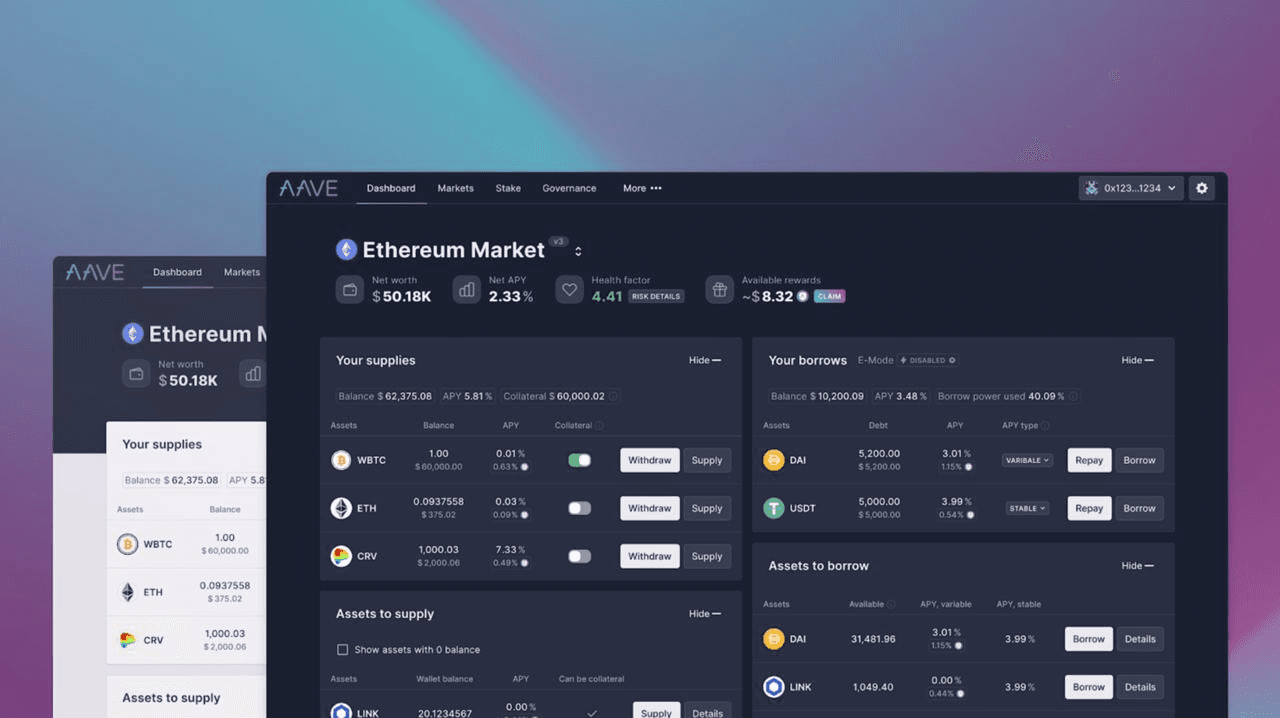
Modern protocols accept collateral from multiple chains via bridges (e.g., wBTC, multichain USDC). A key innovation is yield-bearing collateral, where the deposited asset automatically earns yield (e.g., aUSDC from Aave, cETH from Compound). This yield can offset borrowing costs or be claimed by the borrower, improving capital efficiency.
security-considerations
COLLATERAL ASSET
Security Considerations & Risks
Collateral assets are the foundation of lending and borrowing protocols, but their security properties directly determine the risk profile of the entire system. Understanding these risks is critical for protocol designers and users.
01
Price Volatility & Liquidation Risk
The primary risk for any collateral asset is price volatility. If the asset's market value drops significantly, it may fall below the required collateralization ratio, triggering a liquidation event. This can lead to:
- Liquidator front-running: Bots competing to liquidate positions for profit.
- Bad debt: If collateral value plummets too quickly, liquidations may fail to cover the loan, creating system-wide insolvency.
- Example: The 2022 collapse of LUNA/UST demonstrated how extreme de-pegging of a major collateral asset can cascade through DeFi.
02
Smart Contract & Custodial Risk
Collateral is only as secure as the contract holding it. Key risks include:
- Smart contract vulnerabilities: Bugs or exploits in the lending protocol's code can lead to the theft or permanent locking of collateral.
- Bridge risk: For assets native to other chains (e.g., wBTC, stETH), security depends on the cross-chain bridge used to mint the wrapped version. Bridge hacks are a major attack vector.
- Custodial backing: For tokenized real-world assets (RWAs) or centralized stablecoins, users bear the counterparty risk of the issuing entity.
03
Liquidity & Oracle Risk
The stability of a collateralized position depends on accurate pricing and the ability to sell the asset. Critical failures include:
- Oracle manipulation: If the price oracle feeding data to the protocol is attacked or delayed, it can cause false liquidations or prevent necessary ones.
- Market liquidity: An asset may be highly volatile or impossible to sell at the oracle price during a crisis, leading to liquidation failures. Illiquid collateral like NFTs exacerbates this.
- Example: The 2020 "bZx flash loan attack" manipulated oracle prices to drain collateral from lending pools.
04
Concentration & Systemic Risk
Over-reliance on a single collateral asset creates systemic fragility. Risks involve:
- Single-point-of-failure: If one major collateral asset (e.g., a specific stablecoin) fails, it can cripple multiple interconnected protocols.
- Correlated assets: Using assets that move in price together (e.g., ETH and stETH) reduces diversification benefits and amplifies risk during market downturns.
- Governance attacks: For governance token collateral, an attacker could borrow using the token, acquire voting power, and change protocol parameters maliciously.
05
Slashing & Staking Risks (PoS Assets)
Proof-of-Stake (PoS) assets used as collateral (e.g., staked ETH) carry unique slashing risks. Validator penalties on the underlying network can reduce the collateral's value without a market price change. This includes:
- Involuntary unbonding: Slashed assets may be locked or withdrawn over a long unbonding period, making them illiquid when needed for liquidation.
- Yield variability: The staking yield, often used to pay loan interest, is not guaranteed and can change with network conditions.
06
Regulatory & Censorship Risk
External legal actions can impact collateral security. Key considerations are:
- Asset blacklisting: Regulatory bodies can sanction addresses or smart contracts, potentially freezing centralized stablecoin collateral (e.g., USDC).
- Protocol sanctions: A lending protocol itself could be sanctioned, restricting access to collateral.
- Privacy trade-offs: Using privacy-focused coins as collateral may attract regulatory scrutiny, increasing legal uncertainty for the protocol and its users.
COLLATERAL ASSET
Frequently Asked Questions (FAQ)
A collateral asset is any digital or physical asset pledged as security for a loan or to back the value of a derivative financial instrument on a blockchain. This section answers the most common technical and operational questions about collateral in decentralized finance (DeFi).
A collateral asset in decentralized finance (DeFi) is a crypto-asset, such as ETH, wBTC, or a stablecoin, that a user deposits into a smart contract to secure a loan or mint a synthetic asset. The smart contract, typically a lending protocol like Aave or MakerDAO, holds the collateral and can liquidate it if the loan's collateralization ratio falls below a predefined threshold, ensuring the loan remains solvent without a central authority.
Chains We Build On
Looking to build on a specific blockchain?
We build smart contracts, DeFi applications, wallets, tokenization platforms, and blockchain infrastructure across the major ecosystems teams choose today. That includes Ethereum, Arbitrum, Optimism, Polygon, Avalanche, Solana, Sui, Aptos, Hedera, Stellar, and NEAR, with support for additional EVM and non-EVM networks based on your product requirements.
EVM ecosystems
- Ethereum

- Arbitrum

- Optimism

- Polygon

- Avalanche

- Cronos

Non-EVM ecosystems
- Solana

- Sui

- Aptos

- Hedera

- Stellar

- NEAR

Additional ecosystems
- Polkadot

- Cosmos

- TON

- Cardano

- Algorand

- Tempo

Also available for Base, appchains, custom EVM networks, and cross-chain product architecture.
COLLATERAL ASSET
Common Misconceptions
Clarifying widespread misunderstandings about the role, risks, and mechanics of collateral assets in DeFi lending, borrowing, and stablecoin protocols.
No, depositing a collateral asset does not guarantee its safety; it transfers custody and introduces specific risks. The asset is locked in a smart contract controlled by the protocol's code, not a traditional custodian. Its safety depends on:
- Smart contract security: Vulnerabilities or exploits can lead to loss.
- Protocol insolvency: If the value of borrowed assets exceeds the collateral value due to market crashes, your position may be liquidated.
- Oracle failures: Incorrect price feeds can trigger faulty liquidations.
- Governance risk: Protocol upgrades or parameter changes can alter the risk profile. The asset is not 'insured' in the traditional sense.
KEY PROTOCOL PARAMETERS
Collateral Factor Comparison
A comparison of collateral factor (Loan-to-Value ratio) mechanics and risk parameters across major DeFi lending protocols.
| Parameter / Feature | Compound v3 | Aave v3 | MakerDAO |
|---|---|---|---|
Primary Term | Collateral Factor | Loan-to-Value (LTV) | Collateralization Ratio (CR) |
Risk Threshold | Liquidation Threshold | Liquidation Threshold | Liquidation Ratio |
Typical Range (ETH) | 68% - 75% | 70% - 80% | 145% - 170% |
Isolated Risk Pools | |||
Dynamic Adjustment by Governance | |||
Automatic Rate Based on Utilization | |||
Borrow Cap Enforcement | |||
Base Asset for Liquidation | USDC | Protocol Stablecoin | DAI |
Trusted by Industry Leaders
Delivering blockchain solutions for 5+ years.
We have partnered with 50+ leading DeFi protocols, NFT ecosystems, and fintech innovators to build secure, scalable, and capital-efficient blockchain products.
Selected Partners & Clients








“I've been working with Chainscore Labs for last 3+ years, they've consistently delivered with strong ownership across multiple projects. The team is reliable and detail-oriented.”
L
Lee Erswell
CEO, Telos Foundation
how to get started
How to get started?
If you're looking for blockchain integration, ChainScore Labs has 5+ years of experience helping teams build and integrate exchanges, wallets, smart contracts, tokenization solutions, and protocol-connected products, we can help you choose the right path, integrate securely, and get to production faster. Our team consists of experienced blockchain developers and architects who can help you with your blockchain integration needs.
01
Exploration & Strategy
Define your product goals and choose the right blockchain architecture for your use case.
02
Architecture & Design
Design the smart contracts, tokenomics, and security parameters of your system.
03
Development & Integration
Build and integrate with wallets, oracles, and front-end dApps for a seamless experience.
04
Security & Launch
Comprehensive audits followed by a risk-managed mainnet deployment to protect your users.
Explore More Solutions
Discover our
blockchain development services.
We build production-grade blockchain solutions for top-tier projects across DeFi and Web3.
Book a Call

Start a build
Need a blockchain engineering team?
Send the project context and we will respond with next steps, scope questions, and a practical path to delivery.