Yield farming, also known as liquidity mining, is a decentralized finance (DeFi) practice where users provide their cryptocurrency assets to a liquidity pool or a lending protocol to earn rewards. These rewards are most often paid in the protocol's native governance token, creating an incentive mechanism to bootstrap liquidity and user adoption. The process is automated by smart contracts on blockchains like Ethereum, eliminating the need for traditional financial intermediaries.

Glossary
Yield Farming
Yield farming is the practice of locking or staking crypto assets in a DeFi protocol to generate returns, typically in the form of additional tokens, trading fees, or interest.
definition
DEFINITION
What is Yield Farming?
Yield farming is a core DeFi mechanism where users lock or lend their crypto assets to generate high returns, typically in the form of additional tokens.
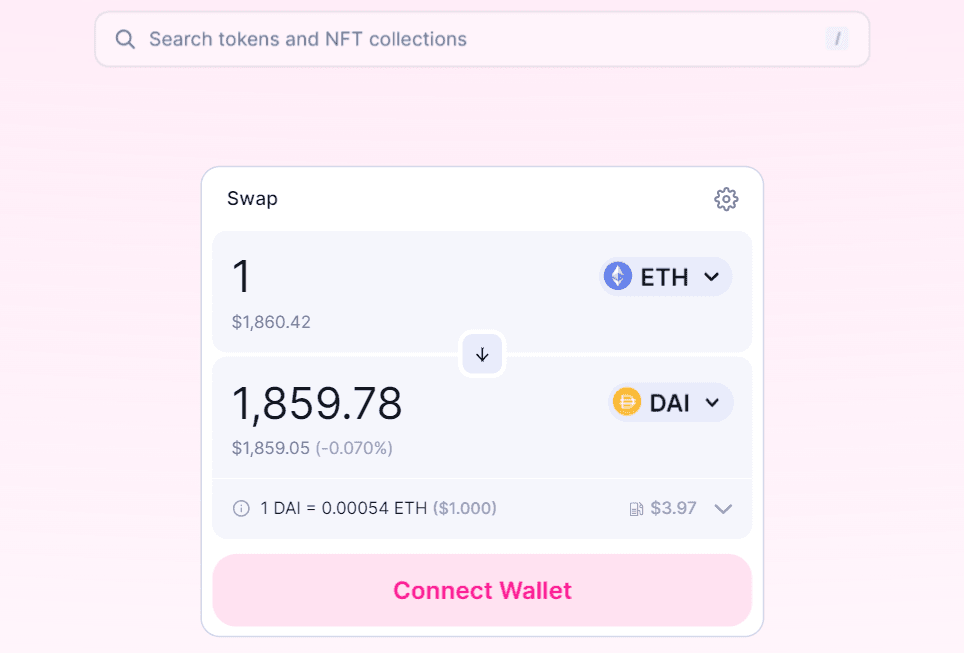
The mechanics typically involve a user depositing a pair of tokens (e.g., ETH and a stablecoin like DAI) into an Automated Market Maker (AMM) such as Uniswap or SushiSwap. In return, the user receives liquidity provider (LP) tokens, which represent their share of the pool. These LP tokens can then be 'staked' or deposited into a separate yield farming contract to earn additional token rewards. The total return, or Annual Percentage Yield (APY), is a combination of trading fees from the underlying AMM and the newly minted incentive tokens.
Key strategies in yield farming include seeking the highest APY by moving assets between protocols (yield hopping), leveraging positions through borrowing, and participating in liquidity bootstrapping events for new projects. However, these high returns come with significant risks, including smart contract risk (bugs or exploits), impermanent loss (divergence in the value of deposited assets), and token volatility risk where reward tokens may depreciate in value.
etymology
WORD ORIGIN
Etymology
The term 'Yield Farming' emerged from the convergence of traditional finance and decentralized protocols, creating a new lexicon for blockchain-native financial activities.
The term Yield Farming is a metaphorical compound derived from traditional agriculture, where 'yield' refers to the return on an investment and 'farming' implies the active, ongoing effort required to cultivate that return. In the context of decentralized finance (DeFi), it describes the practice of strategically moving cryptocurrency assets between various liquidity pools and lending protocols to maximize returns, often in the form of interest, trading fees, and newly minted governance tokens. The 'farming' analogy captures the continuous, hands-on management required to optimize these complex strategies.
The concept and its nomenclature gained mainstream traction in mid-2020 with the launch of Compound Finance's COMP token distribution. Compound introduced a liquidity mining program that rewarded users who supplied or borrowed assets on its platform with COMP tokens. This created a powerful feedback loop: users 'farmed' COMP tokens by providing liquidity, which in turn drove more capital into the protocol. The term quickly became the standard descriptor for this new, incentivized form of capital allocation within the DeFi ecosystem, distinguishing it from passive staking or simple lending.
Linguistically, 'Yield Farming' is part of a broader trend in crypto to adopt and repurpose terms from conventional finance (APY, liquidity) and combine them with more visceral, activity-based metaphors (mining, staking, farming). This serves to demystify complex financial mechanisms by grounding them in familiar concepts, while also signaling their more active and protocol-native nature. The term has since evolved to encompass a wide spectrum of activities, from simple automated market maker (AMM) deposits to highly leveraged, multi-protocol strategies often described as DeFi legos.
how-it-works
MECHANICS
How Yield Farming Works
Yield farming is a core DeFi mechanism where users provide liquidity to a protocol in exchange for rewards, typically in the form of additional tokens.
Yield farming, also known as liquidity mining, is a process where cryptocurrency holders lock their assets into a smart contract-based liquidity pool. In return for providing this liquidity, they receive rewards, which are usually paid in the protocol's native governance token. This mechanism is designed to bootstrap liquidity and decentralize governance by distributing tokens to early users and supporters. The core financial incentive is the Annual Percentage Yield (APY), which represents the projected annualized return on the deposited assets.
The technical workflow involves several key steps. First, a user deposits a pair of tokens, such as ETH and USDC, into an Automated Market Maker (AMM) pool like Uniswap or a lending protocol like Compound. The user then receives LP (Liquidity Provider) tokens, which are a blockchain receipt representing their share of the pool. To begin farming, these LP tokens are often staked into a separate, incentivized smart contract. This staking action triggers the reward distribution mechanism, issuing yield farming tokens like COMP or SUSHI to the user's wallet on a per-block basis.
Returns are generated from multiple, often compounding, revenue streams. The primary source is trading fees from the AMM, which are automatically added to the liquidity pool, increasing the value of the user's LP tokens. The secondary, and often more lucrative, stream is the incentive tokens distributed by the protocol. Sophisticated farmers employ strategies like "yield hopping"—moving capital between protocols to chase the highest APYs—and use leveraged farming through recursive borrowing and lending to amplify potential returns, though this significantly increases risk.
The activity carries substantial risks beyond market volatility. Impermanent loss occurs when the price ratio of the deposited assets changes compared to simply holding them, potentially eroding fees earned. Smart contract risk is ever-present, as bugs or exploits in the complex code can lead to total loss of funds. Furthermore, reward token volatility means the value of earned incentives can plummet. Yield farming is therefore a highly active, technical strategy that requires constant monitoring of APYs, gas fees, and protocol security audits.
key-features
YIELD FARMING
Key Features
Yield farming is a core DeFi mechanism where users provide liquidity to protocols in exchange for rewards, typically in the form of governance tokens or fees. It involves complex strategies to maximize returns on crypto assets.
01
Liquidity Provision
The foundational act of depositing crypto assets into a liquidity pool on a DeFi protocol, such as a Decentralized Exchange (DEX). Providers receive LP (Liquidity Provider) tokens representing their share of the pool, which earns a portion of the trading fees. This is the primary way to earn a base yield before additional incentives.
02
Reward Tokens & Incentives
Protocols distribute their native governance tokens (e.g., UNI, SUSHI, COMP) as extra rewards to attract liquidity, a practice known as liquidity mining. This creates a dual-income model:
- Trading fees from the underlying pool.
- Inflationary token emissions from the protocol's treasury. The value of these rewards is highly variable and tied to token market price.
03
Automated Market Makers (AMMs)
Most yield farming occurs within Automated Market Maker protocols like Uniswap or Curve. These smart contract-based pools use mathematical formulas (e.g., x*y=k) to price assets algorithmically, eliminating order books. Farmers provide the paired assets (e.g., ETH/USDC) that enable this automated trading, earning fees from every swap.
04
Yield Optimization & Aggregators
To maximize returns, farmers use yield aggregators (e.g., Yearn Finance) that automatically move funds between the highest-yielding protocols. Strategies involve staking LP tokens in additional "vaults" or re-staking rewards to compound returns, a process often called yield farming on yield.
05
Impermanent Loss (IL)
A key risk where the value of deposited assets diverges from simply holding them, caused by price volatility in the pool. If one asset's price changes significantly relative to the other, the automated rebalancing of the AMM can result in a lower dollar value upon withdrawal than the initial deposit, even with earned fees.
06
Smart Contract & Protocol Risk
Farming involves interacting with complex, unaudited, or experimental smart contracts, exposing capital to bugs or exploits. Additional risks include governance attacks, rug pulls (malicious developers draining funds), and economic design failures where token emissions become unsustainable, collapsing the reward system.
examples
YIELD FARMING
Examples & Protocols
Yield farming protocols are the automated market makers and liquidity pools where capital is deployed to generate returns. These platforms define the rules for staking, rewards, and fee distribution.
04
Leveraged Yield Farming
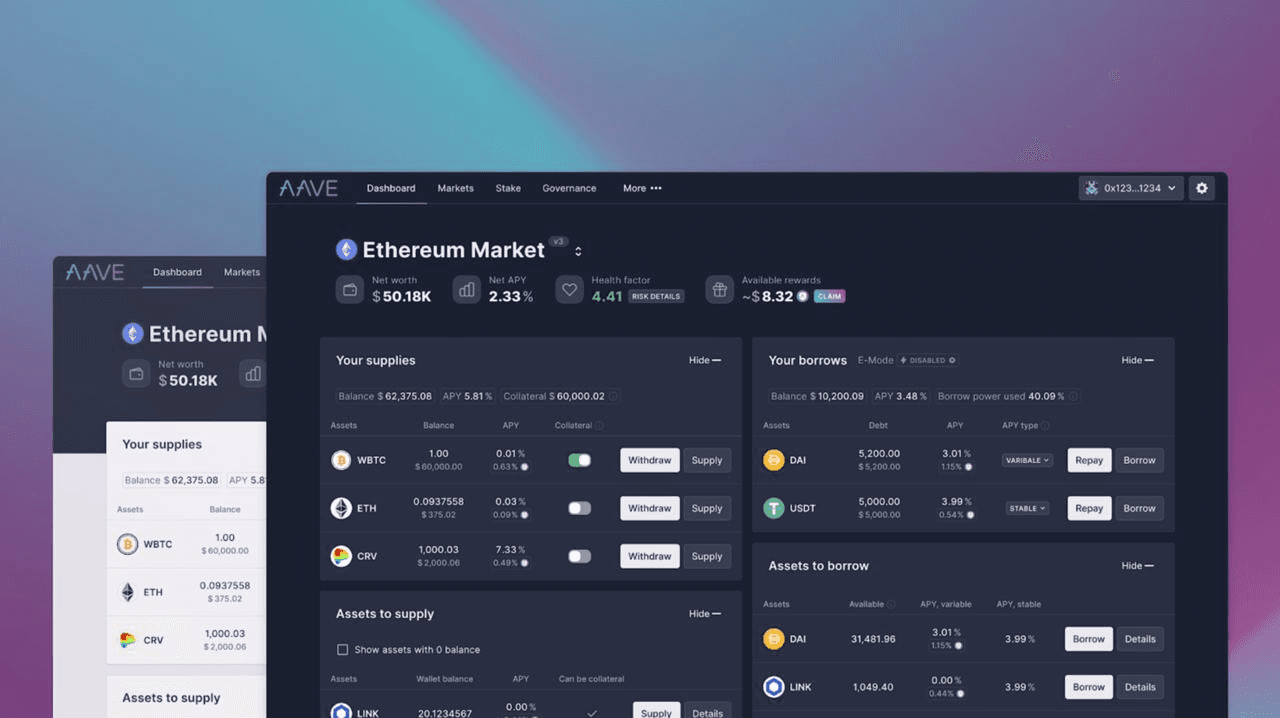
A high-risk strategy that uses borrowed capital to amplify potential returns. Protocols like Alpha Homora and Aave allow users to take out leveraged positions on existing LP positions. This multiplies both fee income and liquidity mining rewards, but also significantly increases exposure to impermanent loss and liquidation risk if asset prices diverge.
05
Cross-Chain & Layer 2 Farming
Farming has expanded beyond Ethereum mainnet to mitigate high gas fees. Key ecosystems include:
- Avalanche (Trader Joe, Benqi)
- Polygon (QuickSwap, Aave)
- Arbitrum & Optimism (Uniswap, Curve) Bridging protocols like Multichain are essential for moving assets between chains to access different farming opportunities and incentives.
06
Risks & Key Concepts
Understanding the risks is critical for any farmer:
- Impermanent Loss: Loss vs. holding assets due to pool price divergence.
- Smart Contract Risk: Vulnerability to bugs or exploits in the protocol code.
- Oracle Risk: Reliance on price feeds for liquidations and pricing.
- Governance Token Volatility: Reward tokens can depreciate rapidly.
- Gas Fees: Transaction costs can erode profits, especially on Ethereum mainnet.
KEY DIFFERENCES
Yield Farming vs. Traditional Staking
A comparison of core mechanisms, risks, and requirements between active DeFi yield farming and passive native token staking.
| Feature | Yield Farming | Traditional Staking |
|---|---|---|
Primary Goal | Maximize yield via active strategy | Secure the network and earn rewards |
Core Asset(s) | LP tokens, multiple volatile assets | Native protocol token |
Technical Complexity | High (requires managing multiple protocols) | Low (often a single protocol interface) |
Primary Risk | Smart contract risk, impermanent loss | Slashing risk, token price volatility |
Reward Source | Trading fees, governance tokens, incentives | Protocol inflation, transaction fees |
Capital Lock-up | Variable (can be days to indefinite) | Fixed/unbonding period (e.g., 7-28 days) |
Typical APY Range | 5% - 100%+ (highly variable) | 3% - 20% (more stable) |
Active Management | Required (harvesting, compounding, migrating) | Minimal (delegate and forget) |
security-considerations
YIELD FARMING
Security Considerations & Risks
Yield farming introduces a complex risk surface beyond simple asset holding. These cards detail the primary technical and economic vulnerabilities participants must assess.
01
Smart Contract Risk
The core vulnerability. Yield farming protocols are governed by smart contracts, which are immutable code deployed on-chain. Any bug, logic flaw, or oversight in this code can be exploited, leading to the permanent loss of user funds. This includes:
- Reentrancy attacks where a malicious contract calls back into the protocol before a state update is finalized.
- Incorrect mathematical formulas for interest or reward calculations.
- Admin key compromises if the contract has privileged functions controlled by a multi-sig or DAO.
02
Impermanent Loss (IL)
A fundamental economic risk for liquidity providers (LPs) in Automated Market Maker (AMM) pools. IL occurs when the price of the deposited assets changes compared to when they were deposited. The LP's value in the pool becomes less than if they had simply held the assets. Key factors:
- Volatility is the driver: The greater the price divergence between the paired assets, the greater the IL.
- Fees vs. Loss: Farming rewards (yield) are intended to offset this risk, but may not always compensate fully.
- Permanent upon withdrawal: The 'loss' is realized and locked in when liquidity is removed from the pool.
03
Oracle Manipulation
Many DeFi protocols, especially lending and synthetic asset platforms used in farming strategies, rely on price oracles (e.g., Chainlink) for asset valuations. If an attacker can manipulate the price feed (e.g., via a flash loan to skew a DEX price), they can trigger faulty liquidations, mint excessive synthetic assets, or drain collateral from a protocol at an incorrect price. This is a systemic risk that can cascade across interconnected protocols.
04
Protocol & Governance Risk
The risk that the underlying farming protocol fails due to economic design flaws or governance decisions. This includes:
- Tokenomics collapse: If the farm's native governance token has unsustainable emission rates or poor utility, its value can plummet, making rewards worthless.
- Rug pulls & exit scams: Malicious developers abandon the project and withdraw user funds.
- Governance attacks: A malicious actor acquires enough voting power to pass proposals that drain the treasury or change fees to their benefit.
- Composability risk: A failure in one protocol (e.g., a lending market) can cause insolvency in a dependent farming strategy.
05
Front-Running & MEV
Miner/Maximal Extractable Value (MEV) bots surveil the public mempool for profitable transactions. In yield farming, this manifests as:
- Front-running: A bot sees your transaction to deposit into a new, high-yield pool and submits its own transaction with a higher gas fee to get in first, diluting your share of early rewards.
- Sandwich attacks: Bots place orders before and after your large swap (e.g., to provide liquidity), profiting from the price impact you cause.
- Liquidation bots: In leveraged farming, bots compete to be the first to liquidate undercollateralized positions for a fee.
06
Counterparty & Custodial Risk
Risk associated with the entities involved in a farming strategy. While DeFi is 'non-custodial' in spirit, dependencies exist:
- Centralized Exchange (CEX) Risk: Farming strategies that bridge to or rely on CEXs for on/off-ramps inherit their custodial and regulatory risk.
- Cross-chain Bridge Risk: Moving assets between chains to farm often involves trusting a bridge's security model, a frequent attack vector.
- Wallet Security: The ultimate custodian is the user. Compromised private keys or seed phrases lead to total loss, irrespective of protocol security.
YIELD FARMING
Common Misconceptions
Yield farming is often misunderstood as a simple interest-bearing account. This section clarifies the core mechanics, risks, and realities behind this complex DeFi strategy.
No, yield farming and staking are distinct DeFi mechanisms with different risk and reward profiles. Staking typically involves locking a native token (e.g., ETH for Ethereum 2.0) to secure a Proof-of-Stake network, earning inflationary rewards. Yield farming is an active strategy where a user provides liquidity to a protocol (like a DEX or lending market) in exchange for liquidity provider (LP) tokens, which are then deposited into a separate yield aggregator or farm to earn additional protocol tokens as rewards. Farming often involves higher complexity, impermanent loss risk, and exposure to multiple smart contracts.
YIELD FARMING
Technical Details
Yield farming, also known as liquidity mining, is a core mechanism in decentralized finance (DeFi) where users provide liquidity to a protocol in exchange for rewards, typically in the form of additional tokens. This section details the technical mechanics, risks, and strategies involved.
Yield farming is a DeFi mechanism where users lock or stake their crypto assets in a liquidity pool to earn rewards, which are usually paid in the protocol's governance tokens. The process works by users depositing assets into a smart contract-powered pool, which is then used to facilitate trading, lending, or other financial services. In return for providing this liquidity, the protocol distributes newly minted tokens to the user, often based on their proportional share of the pool and a predetermined emission schedule. This creates an incentive structure to bootstrap liquidity and decentralize governance.
Key Steps:
- A user deposits a liquidity provider (LP) token (e.g., a Uniswap V2 USDC/ETH pair) into a yield farming contract.
- The smart contract tracks the user's stake over time.
- Based on the protocol's rules, the contract distributes reward tokens (e.g., SUSHI, COMP) to the user's wallet.
- Users can often compound rewards by reinvesting them to earn more.
Chains We Build On
Looking to build on a specific blockchain?
We build smart contracts, DeFi applications, wallets, tokenization platforms, and blockchain infrastructure across the major ecosystems teams choose today. That includes Ethereum, Arbitrum, Optimism, Polygon, Avalanche, Solana, Sui, Aptos, Hedera, Stellar, and NEAR, with support for additional EVM and non-EVM networks based on your product requirements.
EVM ecosystems
- Ethereum

- Arbitrum

- Optimism

- Polygon

- Avalanche

- Cronos

Non-EVM ecosystems
- Solana

- Sui

- Aptos

- Hedera

- Stellar

- NEAR

Additional ecosystems
- Polkadot

- Cosmos

- TON

- Cardano

- Algorand

- Tempo

Also available for Base, appchains, custom EVM networks, and cross-chain product architecture.
YIELD FARMING
Frequently Asked Questions (FAQ)
Yield farming, or liquidity mining, is a core mechanism in decentralized finance (DeFi) where users provide liquidity to protocols in exchange for rewards. This section answers the most common technical and strategic questions.
Yield farming is a DeFi practice where users lock or stake their crypto assets in a smart contract-based liquidity pool to earn rewards, typically in the form of transaction fees, interest, or newly minted governance tokens. It works by connecting to a protocol like Uniswap, Compound, or Curve, where you deposit a pair of tokens (e.g., ETH/USDC) to facilitate trading. In return, you receive LP (Liquidity Provider) tokens representing your share of the pool. These LP tokens can often be staked in a separate farm or gauge to earn additional yield from the protocol's incentive programs. The core mechanism incentivizes liquidity provision, which is essential for the smooth functioning of decentralized exchanges and lending markets.
Trusted by Industry Leaders
Delivering blockchain solutions for 5+ years.
We have partnered with 50+ leading DeFi protocols, NFT ecosystems, and fintech innovators to build secure, scalable, and capital-efficient blockchain products.
Selected Partners & Clients








“I've been working with Chainscore Labs for last 3+ years, they've consistently delivered with strong ownership across multiple projects. The team is reliable and detail-oriented.”
L
Lee Erswell
CEO, Telos Foundation
how to get started
How to get started?
If you're looking for blockchain integration, ChainScore Labs has 5+ years of experience helping teams build and integrate exchanges, wallets, smart contracts, tokenization solutions, and protocol-connected products, we can help you choose the right path, integrate securely, and get to production faster. Our team consists of experienced blockchain developers and architects who can help you with your blockchain integration needs.
01
Exploration & Strategy
Define your product goals and choose the right blockchain architecture for your use case.
02
Architecture & Design
Design the smart contracts, tokenomics, and security parameters of your system.
03
Development & Integration
Build and integrate with wallets, oracles, and front-end dApps for a seamless experience.
04
Security & Launch
Comprehensive audits followed by a risk-managed mainnet deployment to protect your users.
Explore More Solutions
Discover our
blockchain development services.
We build production-grade blockchain solutions for top-tier projects across DeFi and Web3.
Book a Call

Start a build
Need a blockchain engineering team?
Send the project context and we will respond with next steps, scope questions, and a practical path to delivery.