




Free 30-min Technical Strategy Session
Book Now
Build Enterprise Private Blockchains & Custom Infrastructure
Explore Solutions
Build Custom DeFi Infrastructure
Start Building
Launch Production-Ready Web3 Applications
View Capabilities
Free 30-min Technical Strategy Session
Book Now
Build Enterprise Private Blockchains & Custom Infrastructure
Explore Solutions
Build Custom DeFi Infrastructure
Start Building
Launch Production-Ready Web3 Applications
View Capabilities
Free 30-min Technical Strategy Session
Book Now
Build Enterprise Private Blockchains & Custom Infrastructure
Explore Solutions
Build Custom DeFi Infrastructure
Start Building
Launch Production-Ready Web3 Applications
View Capabilities
Free 30-min Technical Strategy Session
Book Now
Build Enterprise Private Blockchains & Custom Infrastructure
Explore Solutions
Build Custom DeFi Infrastructure
Start Building
Launch Production-Ready Web3 Applications
View Capabilities
ChainScore Labs project portfolio and case studies
LABS
Our Portfolio

Defining the Standard for
Web3 Engineering

Every project represents our commitment to precision, security, and the relentless pursuit of engineering excellence.

Chainscore © 2026
Tessera Background
Featured Work

Tessera: Polkadot
Full Node Client

Tessera is a production-grade Full Node Client for Polkadot 3.0, engineered in collaboration with the Web3 Foundation.

Built with Rust and Python, delivering 1.4M+ TPS and supporting over 1000+ validator nodes globally.

Custom RISC-V VM

First blockchain client built on RISC-V architecture

01

1024 Nodes

Supports massive global validator sets

02

ZK-Consensus

Instant finality via zero-knowledge proofs

03

1,400,000+ TPS

Throughput scaled for mass adoption

04
Developed in collaboration with
Polkadot
Web3 Foundation
Web3 Foundation
Selected Work

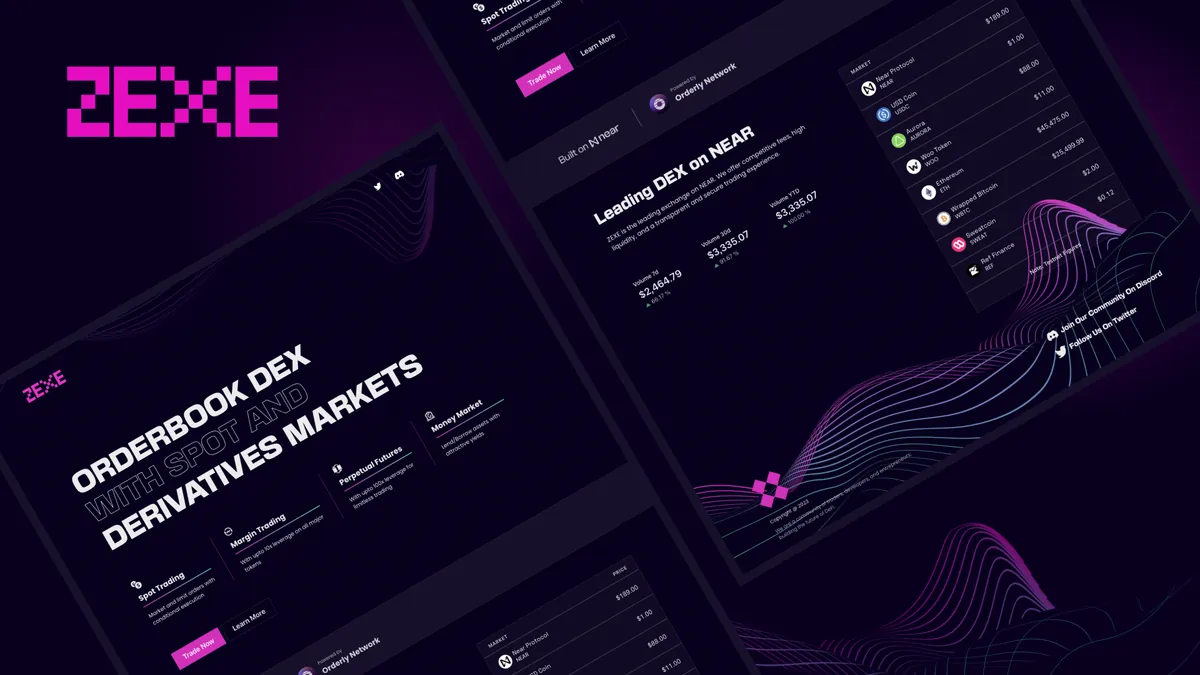
Building the next generation of dApps.

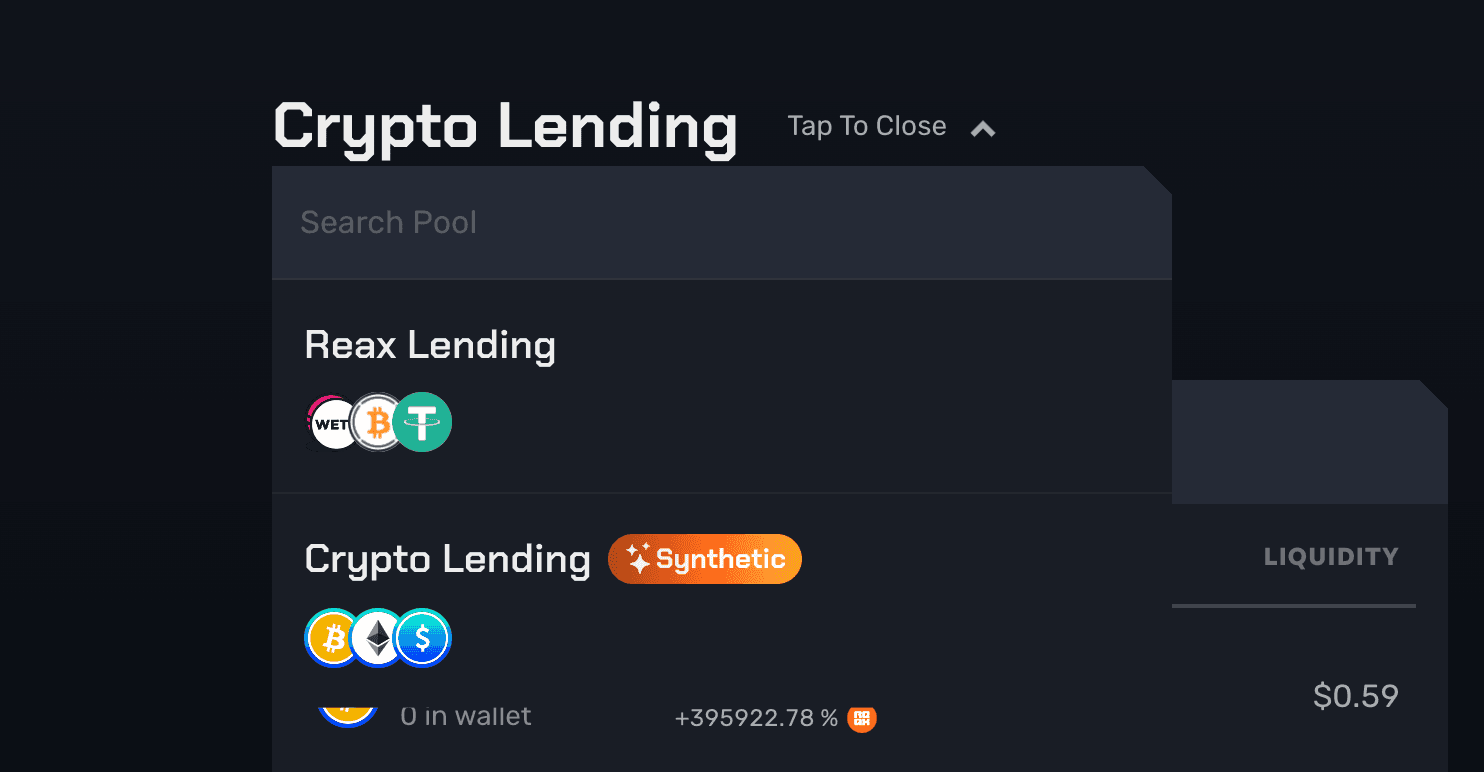
From DeFi protocols to GameFi platforms, we've shipped production systems that handle real money, real users, and real scale.

SOURCE
Open Source

Contributing to the developer community

Giving back to the ecosystem through high-performance utilities and cryptographic libraries.

@tsrkit-types

Python

Formal strict type definitions for Python with compile-time checking and runtime validation for enhanced code safety and performance.

TypesStatic AnalysisPython

@tsrkit-pvm

Python

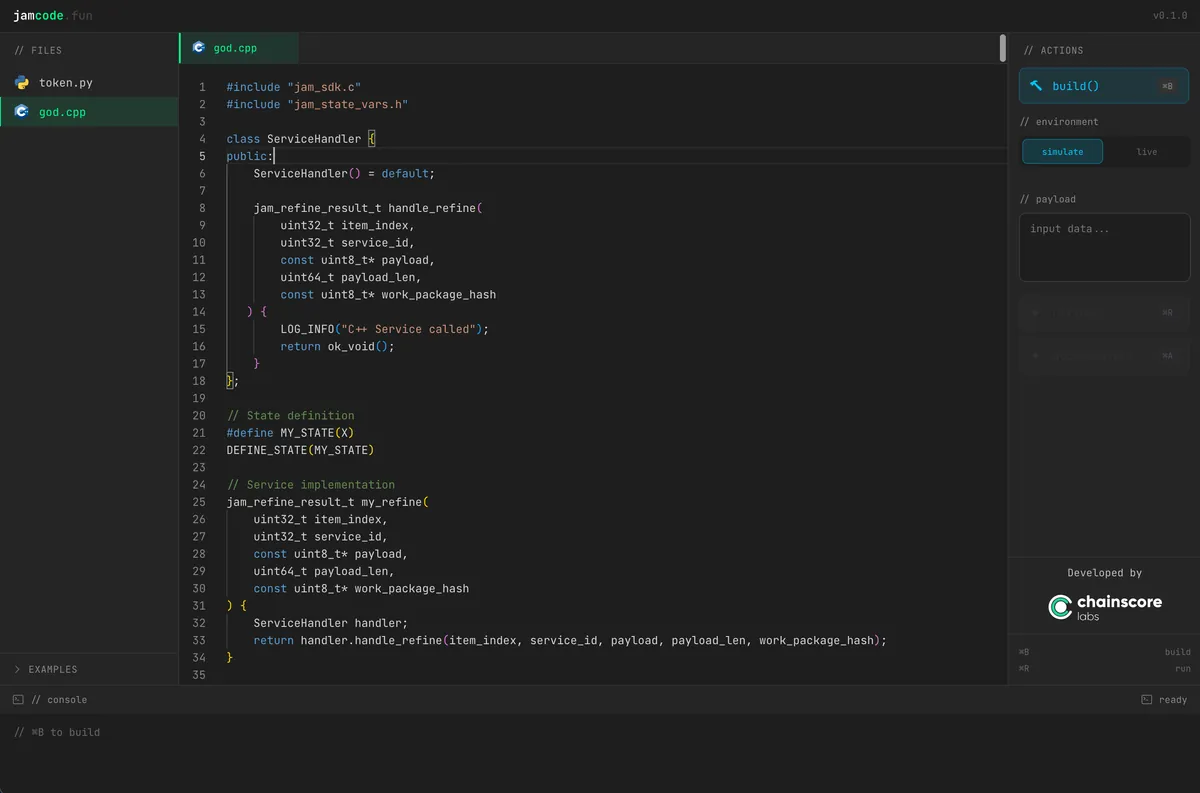
Polkadot Virtual Machine (PVM) implemented in Python & Cython with JIT compilation for high-performance smart contract execution.

Error CorrectionData RecoveryFFT

@rockstore

Python

High-performance FFI-based Python bindings for RocksDB with optimized memory management and native performance.

DatabaseFFIPerformance

@dotring/curves

Python

20+ Elliptic Curves implemented in Python such as Ed25519, Secp256k1, BLS12-381 [w Bandersnatch], P-256 with algorithms for key generation, signing, and verification.

CryptographyPrivacyZero-Knowledge
RESEARCH
Research & Publications

Pushing the limits of blockchain technology

Our team publishes cutting-edge research to advance the field of decentralized systems.

IEEE Access
2025

Implementation and Analysis of Verifiable Random Functions with Additional Data

K.S.N.M. Rao, Prasad Kumkar

Abstract—Research suggests that verifiable random functions (VRFs) are essential cryptographic primitives for blockchain consensus mechanisms. This study provides a comprehensive implementation and analysis of VRFs with additional data on various elliptic curves, including Bandersnatch, Ed25519, secp256k1, and BLS12-381. Results showed significant improvements in verification efficiency when utilizing curve-specific optimizations. Ring VRF constructions using KZG commitments were compared with traditional approaches, achieving sub-millisecond verification for rings up to 1024 members.

VRFZK ProofsRing Signatures
2026

Comparative Study of Modular Data Availability Protocols for Blockchain Systems

Prasad Kumkar, Pranjal Sarode

Abstract—This work explores various modular data availability protocols, analyzing their performance, security, and scalability in blockchain environments. We present a systematic comparison of leading data availability solutions including Celestia, EigenDA, Avail, and proprietary implementations. Our methodology encompasses theoretical analysis of erasure coding schemes, empirical measurement of sampling efficiency, and formal verification of security guarantees.

Data AvailabilityBlockchainErasure Coding
2026

Scaling Ring Size for Privacy-Preserving Ring Signatures Using Verkle Trees

Prasad Kumkar

Abstract—In this paper, we explore scaling solutions for ring signatures to enable privacy-preserving authentication at scale. Our approach leverages Verkle tree structures combined with inner product arguments to achieve logarithmic proof sizes while maintaining unconditional anonymity guarantees. We present a novel construction that allows ring sizes exceeding 10^6 members with constant-time verification.

Ring SignaturesVerkle TreesPrivacy
2026

Solver Network Design for Intent-Centric DEX Protocols

Prasad Kumkar

Abstract—This paper presents a comprehensive framework for designing solver networks in intent-based decentralized exchange protocols. We analyze the game-theoretic dynamics between solvers competing to fill user intents, proposing novel auction mechanisms that maximize execution quality while preventing collusion. Our model incorporates cross-domain MEV considerations, batch auction timing, and solver reputation systems.

Intent-Based TradingMEVAuction TheoryDEX
2026

Threshold Encryption Schemes for MEV-Resistant Transaction Ordering

Prasad Kumkar

Abstract—We propose a novel threshold encryption framework for mitigating Maximal Extractable Value (MEV) in blockchain transaction ordering. Our construction employs distributed key generation among validators combined with timelock puzzles to ensure transaction content remains encrypted until ordering is finalized. We analyze the economic incentives for validators under various collusion scenarios and prove that our scheme achieves MEV-resistance under honest majority assumptions.

MEVThreshold CryptographyTransaction OrderingPBS
2026

Optimal Concentrated Liquidity Provision: A Game-Theoretic Analysis of Impermanent Loss

Prasad Kumkar

Abstract—This paper develops a comprehensive game-theoretic model for optimal liquidity provision in concentrated liquidity AMMs such as Uniswap v3. We derive closed-form solutions for optimal tick range selection under various volatility regimes and fee tier structures. Our analysis reveals that rational LPs form a Nash equilibrium at predictable concentration levels, and we quantify the welfare implications of this strategic behavior.

AMMConcentrated LiquidityGame TheoryImpermanent Loss
ENQUIRY

Start Building
Infrastructure That Lasts.

Stop patching. Start engineering. Get a free technical roadmap and a 30min strategy call.

NDA Protected
24h Response
Directly to Engineering Team
10+
Protocols Shipped
$20M+
TVL Overall
NDA Protected Directly to Engineering Team